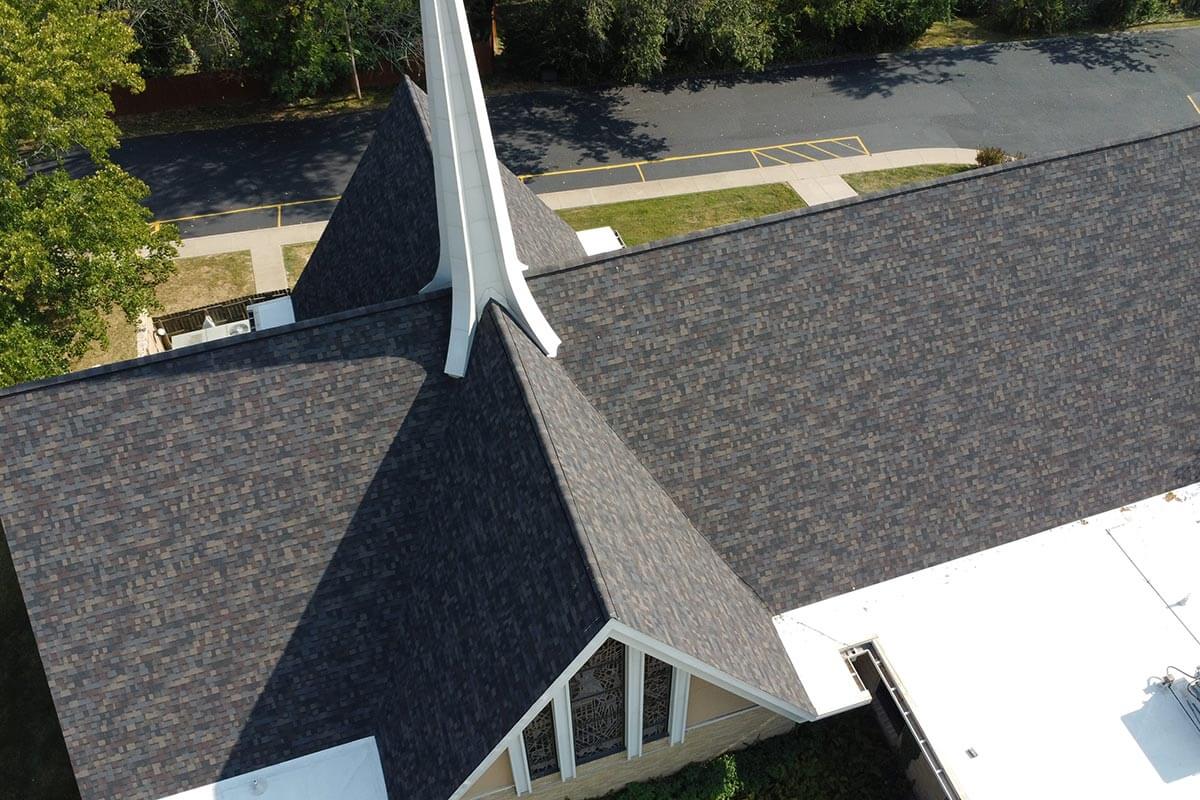
Built-Up Roofing has been waterproofing commercial buildings in St. Petersburg since the city's early industrial growth, and a surprising number of BUR systems installed in the 1970s and 1980s are still performing on Gateway area warehouses, older Carillon Business Park office buildings, and two- and three-story masonry commercial structures along the Central Avenue corridor. These legacy systems deserve a different kind of respect than newer membranes — they were built to last, and many of them have, but their aging characteristics in a coastal Florida climate follow a pattern that demands specific diagnostic attention rather than a one-size-fits-all replacement recommendation.
The core structure of a built-up roof — alternating layers of reinforcing felt or fiberglass ply sheets embedded in hot asphalt, topped with gravel or a mineral cap sheet — provides excellent redundancy. Damage to one ply does not automatically compromise the others. That layered construction is part of why older BUR systems on St. Pete commercial buildings have outlasted many single-ply replacements installed beside them. But subtropical heat and the particular combination of UV exposure and warm rain cycling that defines Pinellas County eventually works on the asphalt binder. The volatile components of the bitumen oxidize, the plies become brittle rather than flexible, and alligatoring appears across flood-coat surfaces.
Hurricane wind load is where aging BUR systems in St. Petersburg face their most serious structural risk. Older BUR installations predate the post-Andrew (1992) and post-Charley (2004) revisions to the Florida Building Code that dramatically increased required wind-uplift resistance for low-slope commercial roofing. A BUR system bonded to a wood-fiber or perlite insulation board over a steel deck with standard cold-applied adhesive may achieve uplift resistance of only 45 to 60 psf — well below the 90+ psf required for Pinellas County under current FBC provisions. When Idalia generated Category 1-equivalent conditions across the Tampa Bay region in 2023, several older commercial buildings in the Gateway area sustained partial uplift failures on roofing assemblies that would never pass today's code requirements. That wind-uplift gap is the primary reason BUR age and condition matters beyond just leak history.
Recovery-versus-tear-off decisions on aging St. Pete BUR systems hinge on three data points: the number of existing layers (Florida Building Code limits low-slope assemblies to two roofing layers before full tear-off is mandatory), insulation moisture content measured by core cuts, and the condition of the substrate deck. A single-ply BUR in good physical condition with dry insulation and a sound deck is often an excellent candidate for a silicone or acrylic coating overlay that extends life 10 to 15 years without the cost or disruption of full tear-off. A two-layer system with saturated perlite insulation found in multiple core cut locations has no legitimate recovery option — wet insulation locks moisture into the assembly and guarantees mold development and accelerated deck corrosion in Florida's warm, humid conditions.
For occupied buildings — particularly the multi-tenant office stock in Carillon Business Park — tear-off logistics require coordination that varies based on access, tenant sensitivity to noise and odor, and staging constraints. Hot-mop BUR applied over an occupied building has a distinctive odor that requires HVAC intake precautions. Phased tear-off and replacement, working in sections to maintain a dry building throughout the project, is standard practice on occupied commercial properties in St. Pete and adds to project duration but protects tenant relationships that property managers cannot afford to damage.
Modified bitumen overlays are the most common upgrade path for aging BUR in St. Petersburg. APP-modified cap sheets applied over an existing BUR base that still has sound plies and dry insulation deliver a new waterproofing surface with better flexibility and UV resistance than the original flood coat, without requiring full assembly replacement. The combination is particularly effective on older downtown buildings where the BUR base has developed alligatoring on the flood coat but the underlying plies are still intact and adhered — a condition we encounter regularly on 1960s-era masonry commercial buildings in the Warehouse Arts District.
Drainage is the area where older BUR systems in St. Pete consistently show deferred maintenance. Cast-iron or galvanized steel drains installed with original BUR systems in the 1970s corrode at their clamping rings and strainer bodies in the warm, salt-influenced air of a coastal Florida market. Replacement of drain hardware at BUR restoration time — rather than simply resealing around existing corroded drains — prevents the most common re-leak pattern we see on newly maintained BUR roofs during the first wet season after work is completed.
Gravel-surfaced BUR systems present an inspection challenge that smooth-surfaced systems do not. The gravel layer makes infrared moisture scanning less reliable, since it disrupts the even thermal emission pattern that IR cameras rely on to detect wet insulation. On gravel BUR roofs, we rely more heavily on core cuts at regular grid intervals and at locations identified by historical leak records to build an accurate moisture map before making any recovery or restoration recommendation.
Questions Owners Ask
How do I know whether my 40-year-old BUR roof should be repaired, coated, or replaced?
The decision depends on three factors: how many existing roof layers are present (two layers is the code maximum before mandatory tear-off in Florida), whether core cuts reveal dry or saturated insulation, and whether the wind-uplift resistance of the current assembly meets current Pinellas County / Florida Building Code requirements. We assess all three before recommending any path forward — a building owner who replaces a recoverable BUR system loses money, and one who coats a saturated assembly guarantees an early failure.
Is a BUR system eligible for silicone coating in St. Pete's climate?
Yes, provided the existing BUR is structurally sound, has no more than one existing roof layer, and core cuts confirm the insulation is dry. APP-modified BUR and smooth-surfaced BUR are better candidates than gravel-surfaced systems, which require gravel removal or embedding before a quality coating application is achievable. We can advise whether your specific system makes economic sense for a coating approach after an inspection and core-cut survey.
Does my older BUR roof meet current hurricane wind-uplift requirements?
Almost certainly not if it was installed before the early 2000s. Florida Building Code wind-uplift requirements increased significantly after Hurricanes Andrew and Charley, and again after Irma. Most pre-2000 BUR assemblies in Pinellas County were designed to standards that are now substantially below current code. This does not automatically require immediate replacement, but it does mean your roof is more vulnerable to hurricane damage than a code-compliant newer assembly, and it may affect your commercial property insurance coverage.
How long does a BUR tear-off and replacement take for a typical Gateway area warehouse?
A single-story 15,000-square-foot warehouse with straightforward deck access and no active tenants typically takes four to seven working days for full BUR tear-off, insulation replacement or upgrade, and new membrane installation under normal Pinellas County summer weather conditions. Morning work windows during wet season allow productive installation time before afternoon thunderstorms develop. Occupied buildings with phased sequencing take proportionally longer based on how many simultaneous open sections the tenant situation permits.
My BUR roof has been leaking in the same spot for years despite patches. Why does it keep coming back?
Recurring leak points in BUR systems are usually the result of an underlying moisture migration pattern that surface patching does not address. Water enters the assembly at one location and travels laterally through the insulation board before appearing at the ceiling below — sometimes 10 to 20 feet from the actual entry point. Patching the visible blister or crack above the interior wet spot rarely addresses the entry point. A proper repair requires tracing the moisture path through core cuts and infrared scanning, then addressing both the entry defect and any saturated insulation found along the migration path.
 Commercial Roof Repair in St. Petersburg | Planned & Emergency
 Commercial Re-Roofing
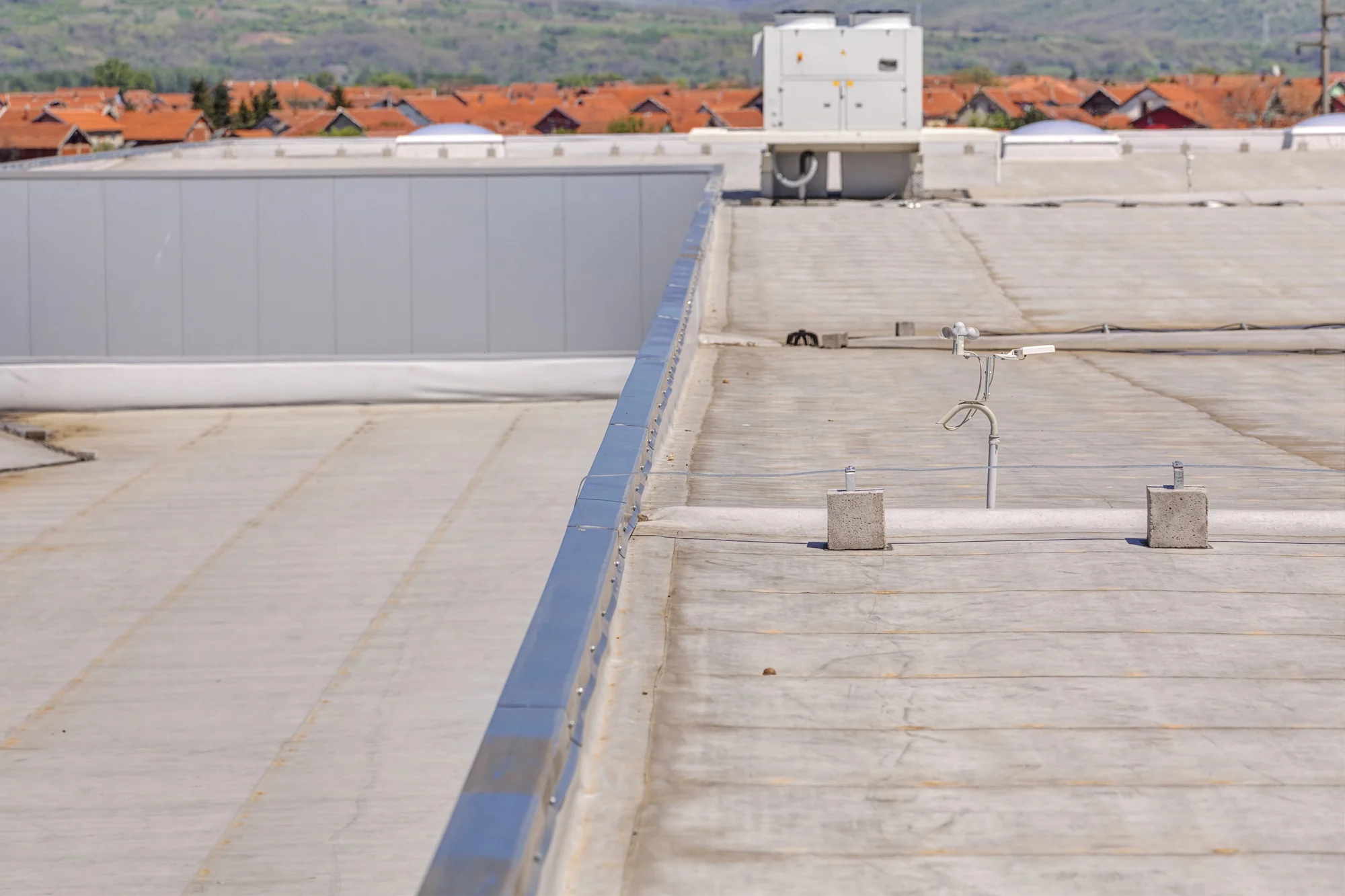 Occupied Building Re-Roofing
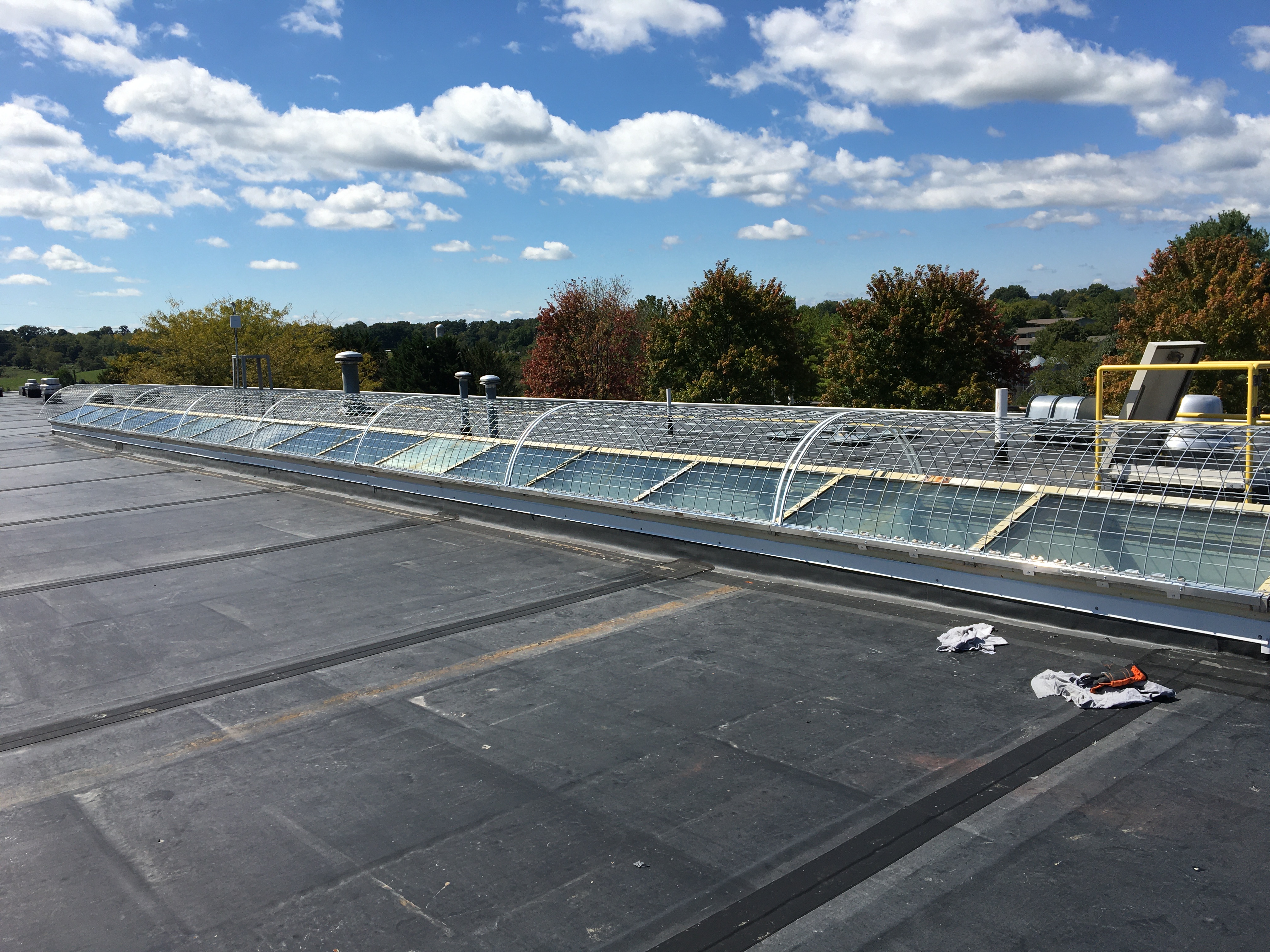 Roof Recover and Overlay