
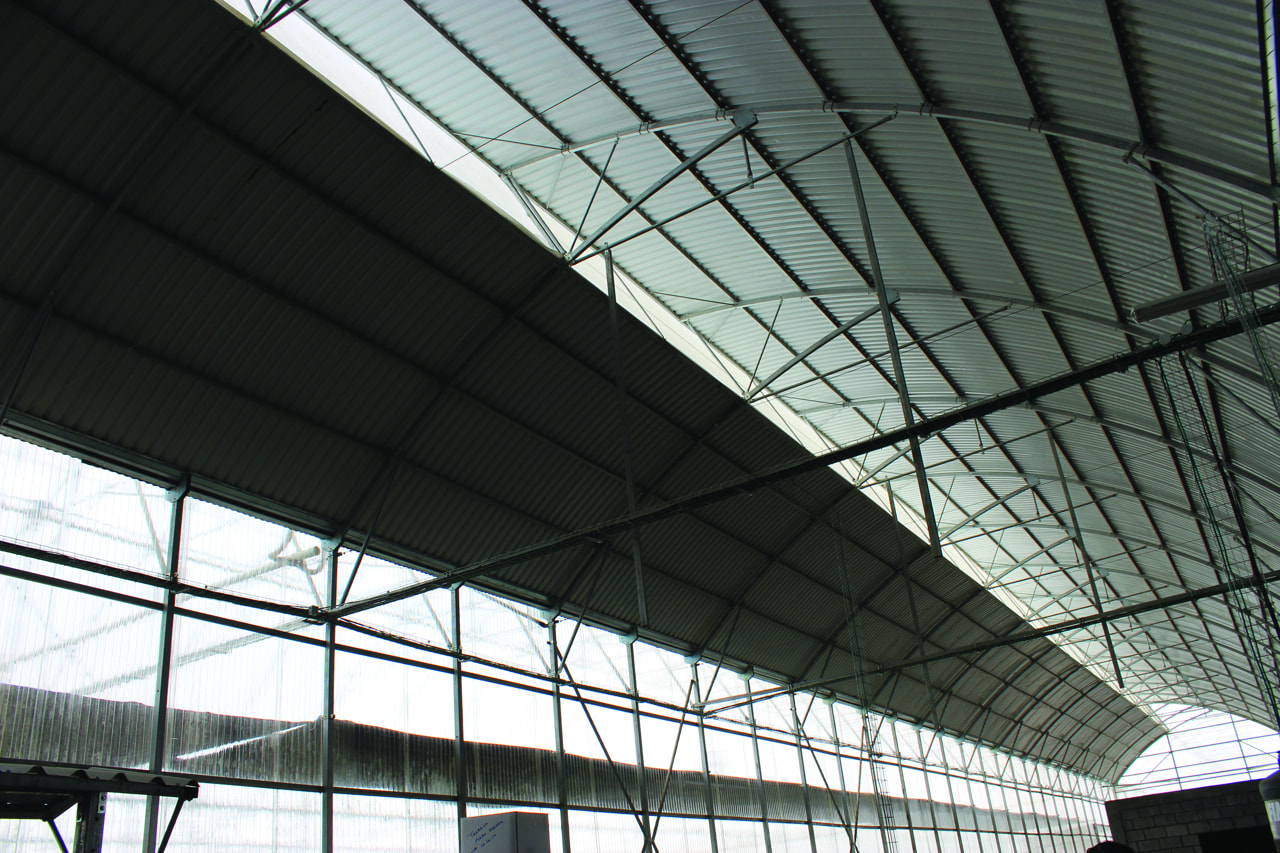
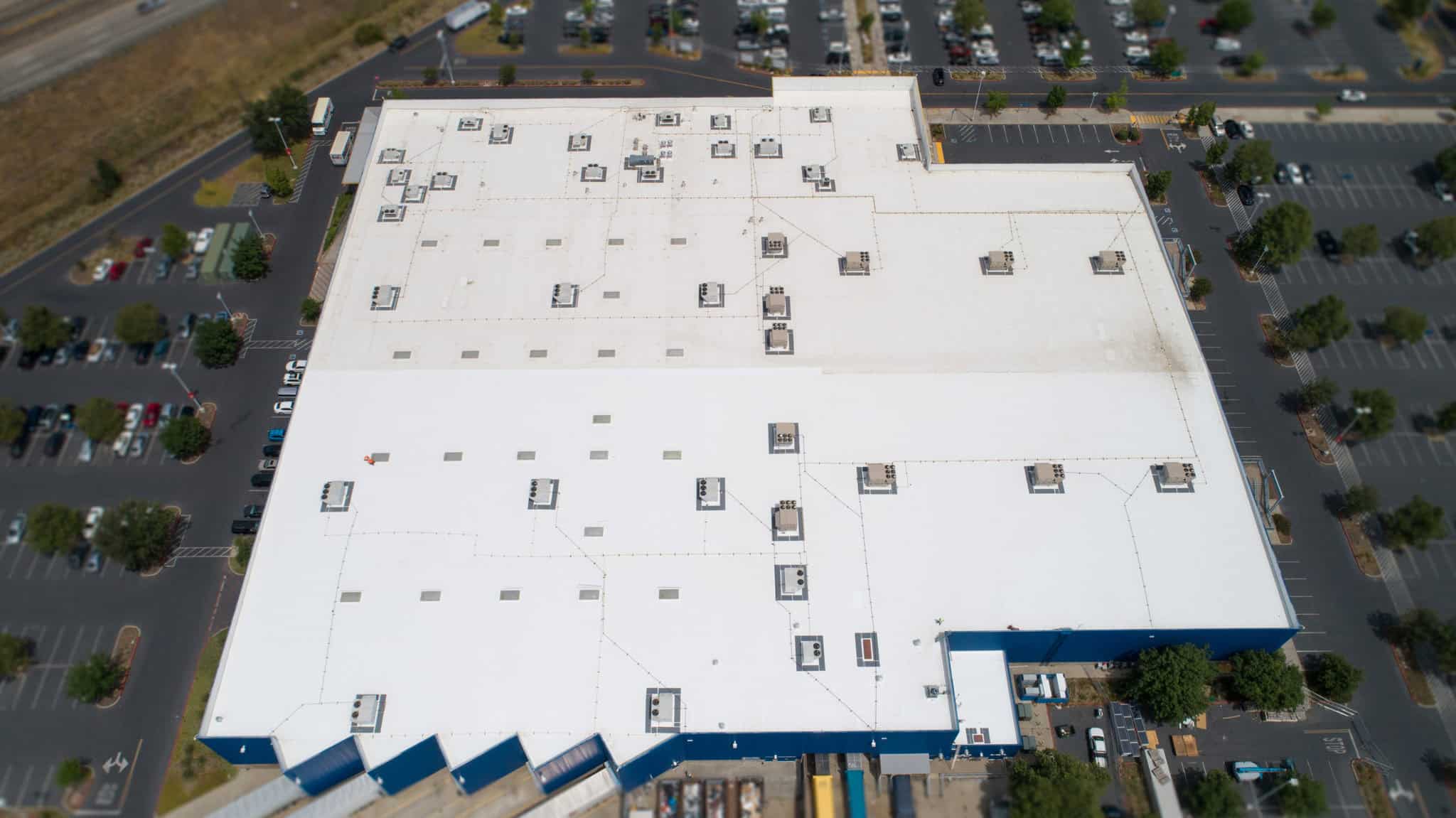
White TPO single-ply membrane has become the defining roofing material of Pinellas County's commercial development boom. Drive the Carillon Business Park on US-19, the expanding commercial corridors of the Gateway area, the new retail developments along 4th Street North, or the emerging mixed-use projects near the Tropicana Field / Historic Gas Plant District redevelopment, and you will find white TPO on the vast majority of newly completed flat commercial roofs. This market dominance is not accidental — it reflects TPO's specific alignment with Florida's energy, durability, and construction efficiency priorities in a way that no other membrane achieves at equivalent cost.
The energy case for white TPO in St. Petersburg is as strong as it gets in the continental United States. St. Pete's annual mean temperature of 73.9°F, combined with a cooling season that runs effectively from April through October and a heating season that exists only nominally, makes solar heat gain through the roof one of the most significant controllable contributors to building energy cost. A quality white TPO membrane with an initial Solar Reflectance of 0.82 to 0.87 reflects the majority of that solar load back to the sky rather than conducting it into the building below. The result — reduction in rooftop surface temperature from 175°F+ on a dark membrane to below 100°F on a reflective TPO surface — translates directly to lower air conditioning demand on Duke Energy Florida and TECO rate schedules. For a 25,000-square-foot warehouse or office building in the Gateway area, that cooling load reduction can deliver $3,000 to $8,000 in annual electricity savings depending on existing insulation, HVAC efficiency, and occupancy profile.
Heat-welded seam technology is the engineering foundation of TPO's performance in Pinellas County's hurricane and wet-season environment. A properly executed TPO seam weld creates a molecular bond between adjacent membrane sheets that, when tested, fails the membrane film rather than the seam joint — meaning the seam is literally stronger than the membrane it connects. This seam integrity is what makes TPO's performance in sustained wind-driven rain events categorically different from EPDM with its adhesive-bonded lap seams or modified bitumen systems with torch- or self-adhered transitions. During a hurricane outer-band impact that drives horizontal rain against every vertical and angled surface on a roof, TPO's welded seams resist infiltration in a way that older adhesive-bond systems cannot reliably duplicate.
Seam quality in field installations is where TPO performance varies significantly between contractors, and where Pinellas County commercial owners should apply scrutiny when evaluating roofing proposals. A heat-weld seam that was made with improperly calibrated welder temperature settings, on a substrate with moisture contamination, or by a welder operating at the wrong speed produces a seam that passes visual inspection but fails under hydrostatic pressure testing or wind load. The afternoon thunderstorm season in St. Pete is an unsparing quality auditor — marginal seams that might survive moderate conditions in a drier climate face repeated high-pressure water loads within weeks of installation. Contractors who invest in proper welder calibration protocols, surface preparation requirements, and seam testing (probe testing of all field seams before project closeout) produce installations that perform measurably better than those where seam quality is assumed rather than verified.
Fastening pattern and insulation attachment in Pinellas County TPO installations are constrained by some of the most demanding wind-load requirements in the continental United States. The Florida Building Code design wind speed for most Pinellas County commercial buildings is 130 to 140+ mph, and the resulting required wind-uplift resistance at perimeter and corner zones demands fastening densities that are substantially higher than national averages. A contractor specifying a Pinellas County commercial TPO installation to national-average fastening patterns is under-designing for local requirements. Every TPO project we install includes an engineer-of-record-reviewed fastening pattern calculation specific to the building's dimensions, height, exposure category, and code wind speed — not a standard pattern from a national product guide that may be appropriate for Atlanta but insufficient for coastal Florida.
Membrane thickness selection for Pinellas County TPO work reflects both durability and hurricane performance considerations. Standard commercial TPO is available in 45-mil, 60-mil, and 80-mil thicknesses. The 45-mil standard thickness is appropriate for most low-traffic, well-maintained flat roofs in protected locations. For Pinellas County commercial buildings with significant maintenance traffic, frequent HVAC service access, or barrier island exposure to wind-driven debris, 60-mil TPO provides meaningfully better puncture resistance and seam strength at modest additional cost. On high-exposure barrier island and waterfront commercial applications, 80-mil specification is occasionally warranted. We recommend thickness selection based on the specific building's traffic and exposure profile rather than defaulting to the minimum standard across all Pinellas County applications.
Biological growth on white TPO is a maintenance reality in St. Pete's subtropical humidity environment. Algae and mildew growth on reflective membrane surfaces is accelerated by the warm, moist post-rain conditions that follow every wet-season event, and white TPO surfaces show discoloration from this biological growth faster than north-Florida or inland markets would indicate. The practical consequence is that reflectivity degrades faster in St. Pete conditions than manufacturer testing (conducted in drier climates) suggests. Annual membrane cleaning with mild detergent solutions during the November post-season maintenance visit restores most of the original reflectivity and prevents biological growth from accumulating to a density where physical scrubbing is required. This cleaning protocol should be part of every Pinellas County TPO maintenance program.
Warranty selection for TPO installations in Pinellas County deserves more attention than it typically receives during the contractor selection process. Major TPO membrane manufacturers (Firestone, Carlisle, GAF, and others active in the Florida market) offer warranties ranging from 10 to 30 years for material and workmanship, with coverage terms that vary significantly in what they cover — specifically whether they cover material replacement cost only or also labor and subsequent damage. Florida climate provisions in some manufacturer warranties — particularly regarding storm and hurricane damage exclusions — should be reviewed before the warranty is cited as a project justification. We provide warranty documentation with clear coverage summaries and help owners understand what is and is not covered under the specific warranty being offered for their installation.
Questions Owners Ask
How long does a TPO roof last in the St. Petersburg climate?
A quality 60-mil TPO installation on a properly prepared substrate with adequate drainage and annual maintenance achieves a service life of 20 to 25 years in Pinellas County conditions. 45-mil systems on buildings with significant maintenance traffic or high UV exposure typically reach 15 to 20 years. The primary service-life variables in St. Pete are seam quality (which determines how many seam repairs are needed over the system's life), drainage performance (ponding accelerates biological growth and UV aging), and maintenance consistency (annual cleaning and penetration inspection extend service life materially). Systems that are installed, ignored, and only serviced reactively after leak calls typically see 12 to 15 years of performance before the cumulative deficiencies warrant replacement consideration.
What causes TPO roofs to fail prematurely on Pinellas County commercial buildings?
The three most common premature failure causes we encounter in St. Pete: first, heat-weld seam failures resulting from installation in Florida's humid conditions without adequate surface preparation or welder calibration — a quality-control issue that is invisible at installation and becomes apparent only when wet-season rain tests the seams; second, penetration flashing failure at HVAC curbs and pipe boots that were properly installed but never maintained past their sealant service life; third, UV reflectivity loss from biological growth accumulation that accelerates membrane aging in ponded areas. All three are preventable with proper installation discipline and annual maintenance.
Is white TPO better than light gray or tan TPO in the St. Pete climate?
Yes, from an energy performance standpoint. White TPO achieves initial Solar Reflectance of 0.82 to 0.87; light gray drops to 0.65 to 0.75; tan to 0.50 or below. In St. Petersburg's cooling-dominated climate, each percentage point of reflectivity lost represents a proportional increase in solar heat gain and cooling cost. The ENERGY STAR minimum reflectivity threshold for low-slope cool-roof products is 0.65 aged value — white TPO comfortably meets that standard; some non-white colors may not. Unless architectural or aesthetic requirements specifically require a non-white membrane, white TPO is the energy-optimal specification for Pinellas County commercial buildings.
Can my existing dark membrane roof be converted to white TPO without full replacement?
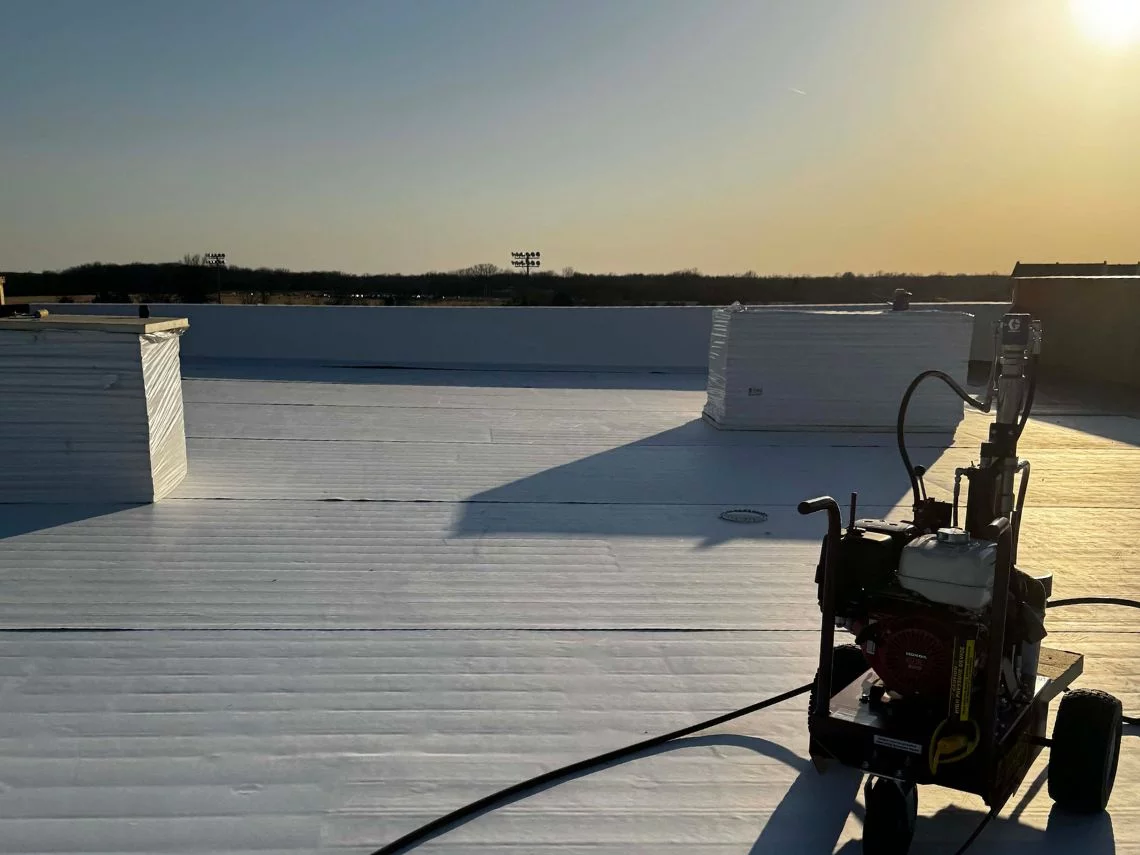
Yes — either through a white silicone coating over the existing membrane (if the membrane is sound and insulation is dry), or through a TPO recover installation over the existing system (if code layer limits allow and core cuts confirm dry insulation). Both approaches deliver a white reflective surface and the associated energy savings at substantially lower cost than full tear-off and replacement. The technical approach — coating versus recover — depends on the existing membrane type, condition, and moisture content. We assess both options and provide cost comparisons for each viable approach during the pre-project inspection.
What should I ask a contractor before accepting a TPO Single-Ply Roofing proposal in Pinellas County?
Five questions that distinguish qualified Pinellas County TPO contractors from those applying national-standard work to a Florida-specific market: (1) What is your seam testing protocol — do you probe-test all field seams before project closeout? (2) Is your fastening pattern engineered for Pinellas County wind-load requirements, or is it a standard pattern from manufacturer literature? (3) What membrane thickness are you proposing and why? (4) Does the warranty you are offering include labor and subsequent damage coverage or material-only replacement? (5) Can you provide references from Pinellas County commercial TPO projects completed in the last three years? Contractors who answer these questions with specifics rather than generalities are the ones whose work is likely to perform as specified when the next hurricane season tests it.
 Commercial Roof Repair in St. Petersburg | Planned & Emergency
 Commercial Re-Roofing
 Occupied Building Re-Roofing
 Roof Recover and Overlay