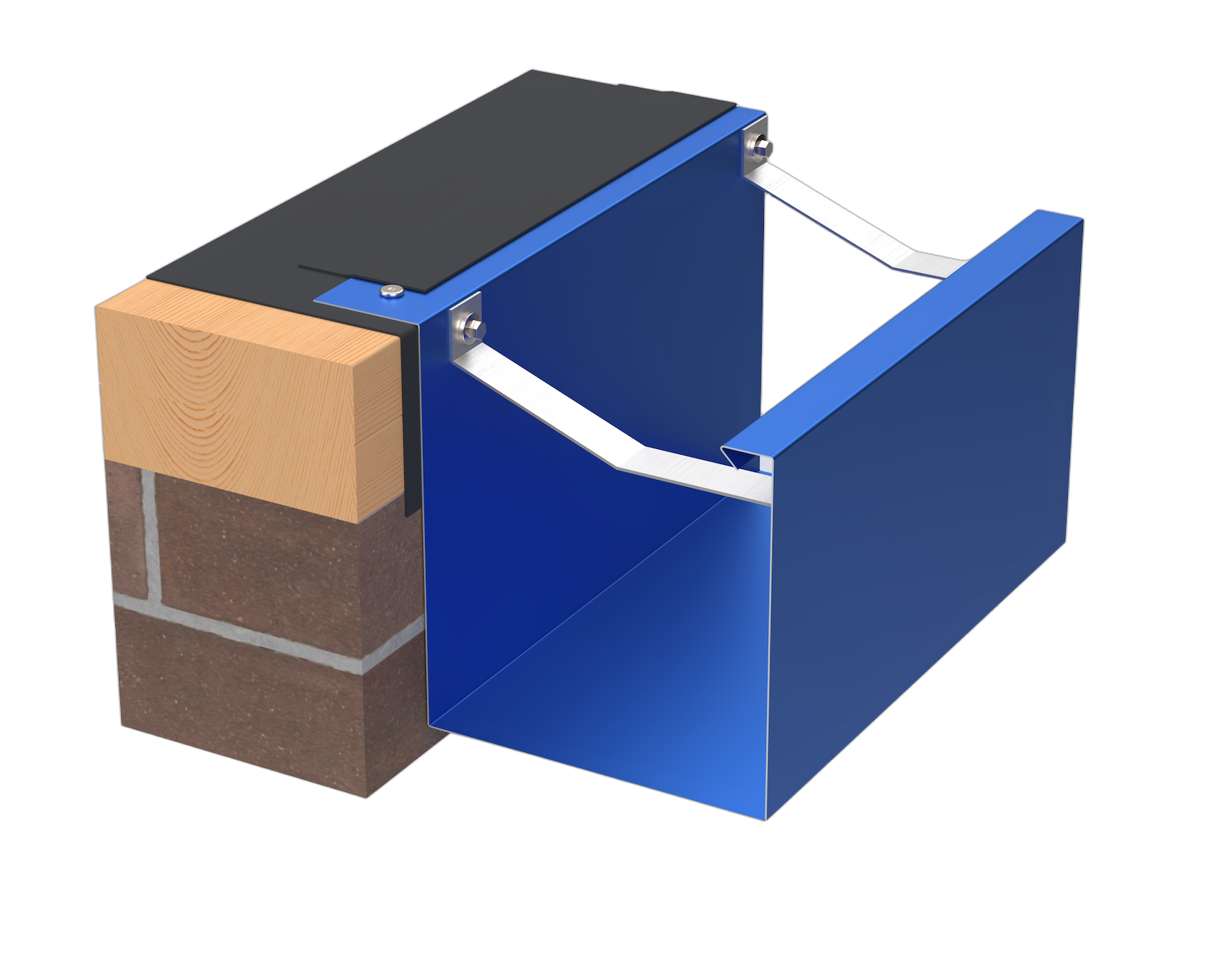
Salt air changes the calculus of edge metal selection in St. Petersburg in ways that specify materials and coatings that would be optional in an inland Florida market and essentially unknown in a continental US market. The city sits between Tampa Bay and the Gulf of Mexico, and both water bodies contribute to a year-round salt-laden atmosphere that attacks uncoated aluminum, galvanized steel, and bare carbon steel at rates that most commercial roofing specifications fail to account for. A standard galvanized steel coping cap installed on a downtown St. Pete parapet will show red rust staining within two to three wet seasons. The same cap on a barrier island building in Tierra Verde or St. Pete Beach may begin failing its mechanical fastener embedment within five years as galvanic corrosion progresses at the screw holes.
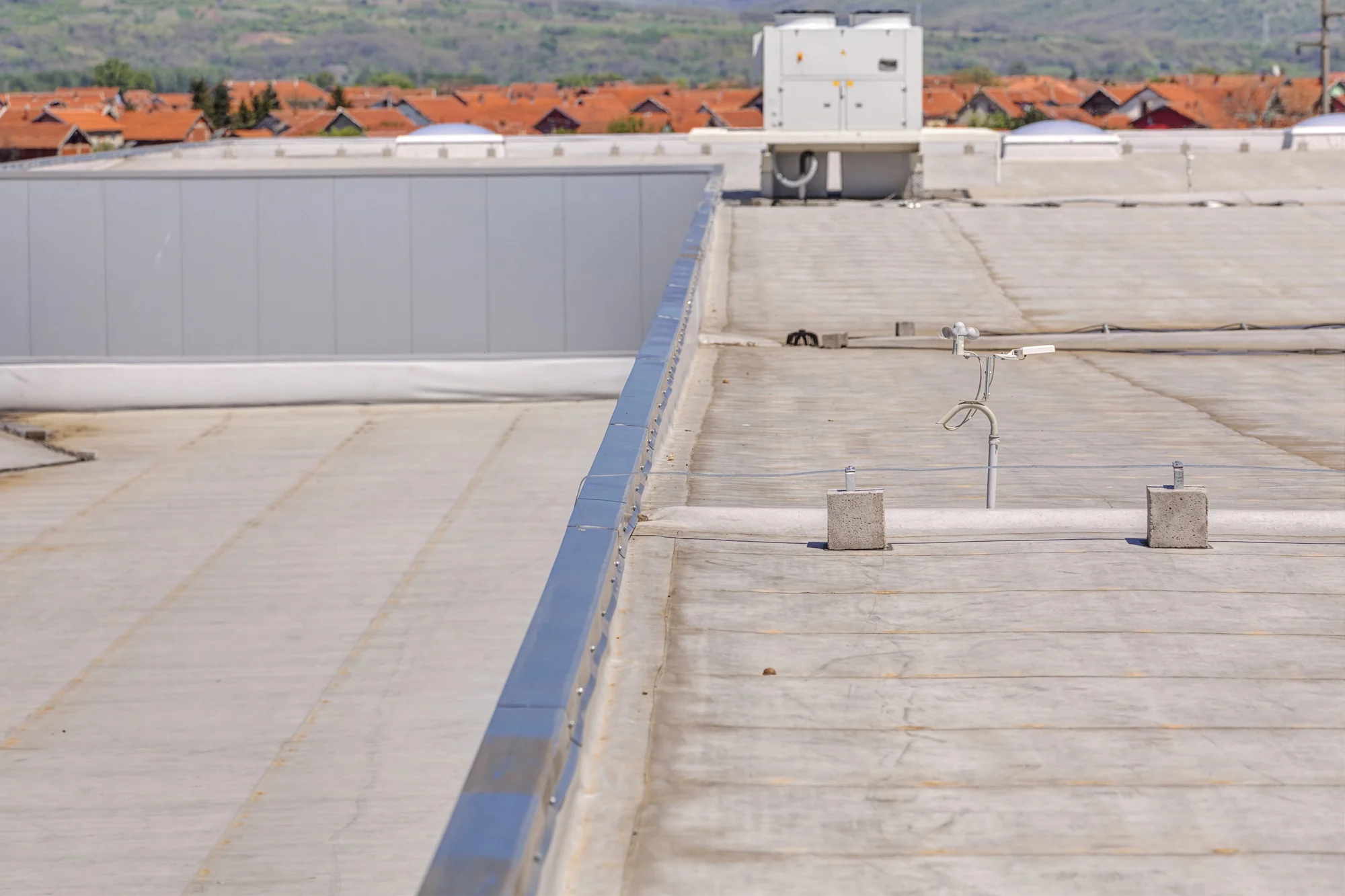
The edge metal and coping system at a commercial building's perimeter is not a decorative element — it is a primary line of defense against wind-driven rain infiltrating the parapet assembly and a critical mechanical anchor for the roofing membrane itself. During a hurricane event, edge metal that has lost fastener embedment through corrosion becomes a projectile and a failure point simultaneously: the metal peels, taking the membrane termination with it, and the building is exposed to sustained wind-driven rain infiltration through the now-open perimeter. Hurricane Ian's 2022 damage survey in the Tampa Bay region documented numerous commercial buildings where edge metal failure preceded membrane loss — not the other way around.
Downtown St. Petersburg's historic masonry buildings along Central Avenue, the Warehouse Arts District, and the EDGE District present a specific coping challenge. Many of these buildings were constructed with solid masonry parapets topped with stone, cast concrete, or early-20th-century metal coping that has long since corroded or been replaced with inadequate patches. Proper coping installation on a masonry parapet requires through-wall fastening into sound masonry — not just surface adhesive — with a sealant program designed for Florida's thermal cycling and UV exposure. The combination of historic parapet irregularity, varying masonry bond conditions, and the need for visually compatible coping profiles on street-visible buildings in a design-conscious urban district requires more field judgment than standard coping work on a suburban warehouse.
Gutters and downspouts in St. Petersburg must be sized and configured for Florida rainfall intensity, not for average annual precipitation. The difference matters: a standard 4-inch K-style gutter sized by the national rule of thumb for 10-year storm recurrence would be dangerously undersized for St. Pete's convective events, which can exceed 6 inches per hour during intense summer storms. Undersized gutters overflow immediately during peak intensity, driving water against the building fascia and foundation rather than away from it. We size gutters and downspouts using Florida Statewide Design Rainfall values from the FDOT Drainage Manual — an approach that results in larger downspout cross-sections and more frequent downspout placement than standard national guidelines.
The transition between gutter systems and roof drains — particularly on two-story commercial buildings with interior drain systems on the main roof and gutters on lower roofline areas — is a common leak point on St. Pete commercial properties that gets overlooked during standard maintenance visits. Gutter outlet connections to downspouts, downspout elbows, and splash block configurations that work adequately during normal rainfall cannot handle the volume of a convective event. Reinforced connections, oversized elbow fittings, and proper underground discharge connections are the difference between a functional wet-season gutter system and one that causes annual foundation or interior damage.
Aluminum is the preferred material for gutter and edge metal systems in Pinellas County coastal environments, but not all aluminum is equal in salt-air resistance. Bare mill-finish aluminum corrodes from the outside in a salt environment, while anodized or factory-coated aluminum with a properly sealed finish provides substantially longer service life. On barrier island buildings and any commercial property within three miles of open salt water, we specify anodized or PVDF-coated aluminum for all gutter and edge metal components and seal all cut edges and fastener penetrations at installation with compatible sealant to prevent corrosion entry points at machined surfaces.
Scupper systems — wall-penetrating openings that allow roof drainage through parapet walls — are common on older St. Pete commercial buildings that lack interior drain systems. Scupper scuppers require a watertight sleeve through the parapet wall, a transition from the roof membrane to the scupper body, and an external downspout or splash pad below. In the Tampa Bay salt environment, scupper bodies fabricated from galvanized or mill-aluminum without through-wall sealant at the parapet penetration are a frequent source of both corrosion and water infiltration into the parapet wall cavity. Replacing scupper bodies with coated aluminum sleeves and fully sealed through-wall transitions is a standard improvement we make when re-flashing these transitions during roof system work.
Maintenance of edge metal and gutter systems is as important as initial specification. Annual inspection of coping joint sealants — which UV-degrade and lose adhesion over five to seven years in Florida's subtropical sun — and cleaning of gutter strainers and downspout outlets before each wet season are the minimum maintenance tasks for these components. The cost of annual gutter cleaning and sealant inspection is a small fraction of the cost of replacing rot-damaged fascia framing or remediating water intrusion into a parapet wall cavity — outcomes that result from deferred maintenance on these systems in St. Pete's high-rainfall environment.
Questions Owners Ask
How do I know if my coping or edge metal needs replacement versus just resealing?
If the metal itself is structurally sound — no significant section loss from corrosion, no mechanical separation from the substrate, and fasteners still embedment-secure — resealing joint sealants and recoating exposed metal surfaces can restore weathertightness for another five to ten years. If metal cross-section is compromised by corrosion (visible pitting or section loss), if fasteners spin freely or pull out easily, or if the metal has deformed or separated from the parapet face, replacement is warranted. We assess both conditions during inspection and do not recommend replacement when resealing will achieve the needed performance.
What material is best for edge metal and coping on a barrier island St. Pete Beach building?
Anodized aluminum or PVDF-coated aluminum is the standard recommendation for barrier island locations in direct salt-air exposure. Stainless steel is the highest-performance option for extreme exposure positions — waterfront facing and low-elevation ocean-adjacent — but comes at significant cost premium. Galvanized steel is not appropriate for barrier island use given its service life in that environment. All cut edges and fastener penetrations should be sealed with a compatible sealant at installation to prevent corrosion initiation at machined surfaces.
Are standard residential gutters appropriate for a small St. Petersburg commercial building?
No. Residential gutter sizing (typically 4-inch or 5-inch K-style) is inadequate for Florida commercial rainfall intensity. Commercial buildings require properly sized gutters using Florida Statewide Design Rainfall values and professionally calculated drainage area per downspout. Undersized gutters overflow during St. Pete's intense afternoon storms and can cause foundation drainage problems, fascia damage, and interior flooding on buildings where gutters discharge near building entrances or mechanical equipment.
Can hurricane wind uplift on edge metal be improved without full replacement?
Sometimes. If the edge metal profile is an older type that predates current ANSI/SPRI ES-1 securement standards, adding additional fasteners or applying a mechanically reinforced cleat system can improve uplift resistance without full replacement. However, if the substrate (wood nailer, parapet wall face, or blocking) has deteriorated or if existing fastener holes have elongated through corrosion-loosening, replacement with properly anchored new edge metal is typically the more reliable and cost-effective solution given St. Pete's hurricane exposure.
How often do downspout outlets need to be cleaned on a St. Pete commercial building?
At minimum, before the start of wet season (April-May) and after any major storm event that deposits visible debris on the roof. Buildings surrounded by mature oak trees or near active construction — including the Tropicana Field / Historic Gas Plant District redevelopment area — may need quarterly cleaning during periods of high organic debris accumulation. A blocked downspout during a peak-intensity afternoon storm creates hydrostatic head against the gutter and roof edge within minutes of storm onset, with immediate consequences for adjacent building components.
 Commercial Roof Repair in St. Petersburg | Planned & Emergency
 Commercial Re-Roofing
 Occupied Building Re-Roofing
 Roof Recover and Overlay