
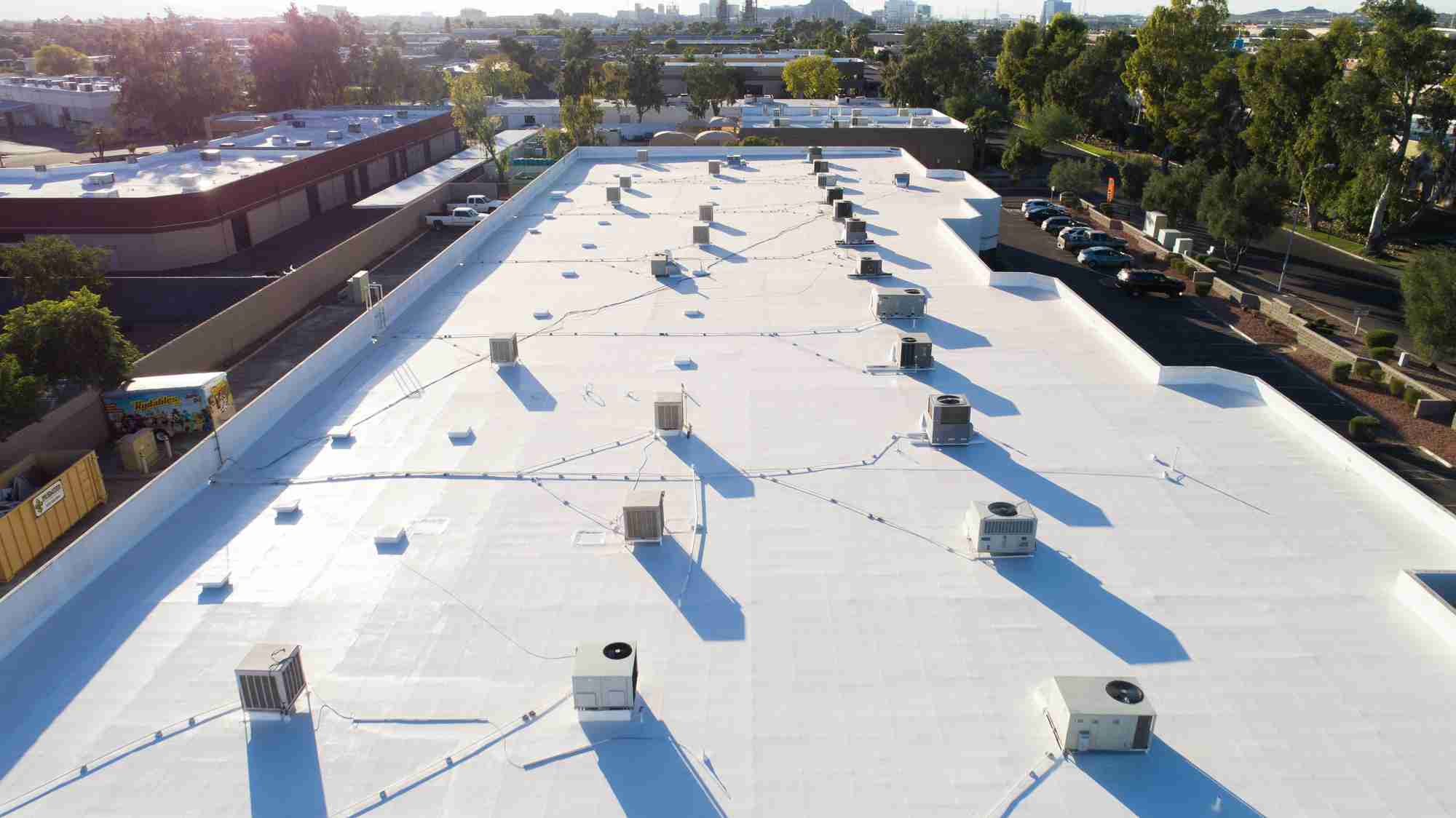
No city in the continental United States makes a stronger financial case for cool roof installation than St. Petersburg, Florida. The city records an annual mean temperature of 73.9°F with essentially no heating season — winter lows rarely fall below the mid-50s, and the city has never experienced a freeze event in the modern climate record. What St. Pete does have is a cooling season that runs from April through October, with peak demand months in June, July, August, and September coinciding precisely with the heaviest rainfall months and the most intense afternoon sun angles. A commercial building without a reflective roofing surface in this climate is paying a preventable energy penalty every single day for six to seven months of the year.
The physics are straightforward: a dark or aged membrane on a flat commercial roof absorbs solar radiation and can reach surface temperatures of 160 to 185°F during a St. Pete July afternoon. The thermal energy conducted through that membrane into the building's roof assembly increases the cooling load on the building's HVAC system — which is already running continuously during the hottest part of the day when electricity demand charges from Duke Energy Florida and TECO are at their peak. A white reflective membrane with a Solar Reflectance Index (SRI) of 90 or higher keeps the same rooftop surface below 100°F under identical solar conditions. That 80-plus-degree surface temperature differential directly reduces the heat flux into the building and the corresponding HVAC work required to maintain interior comfort.
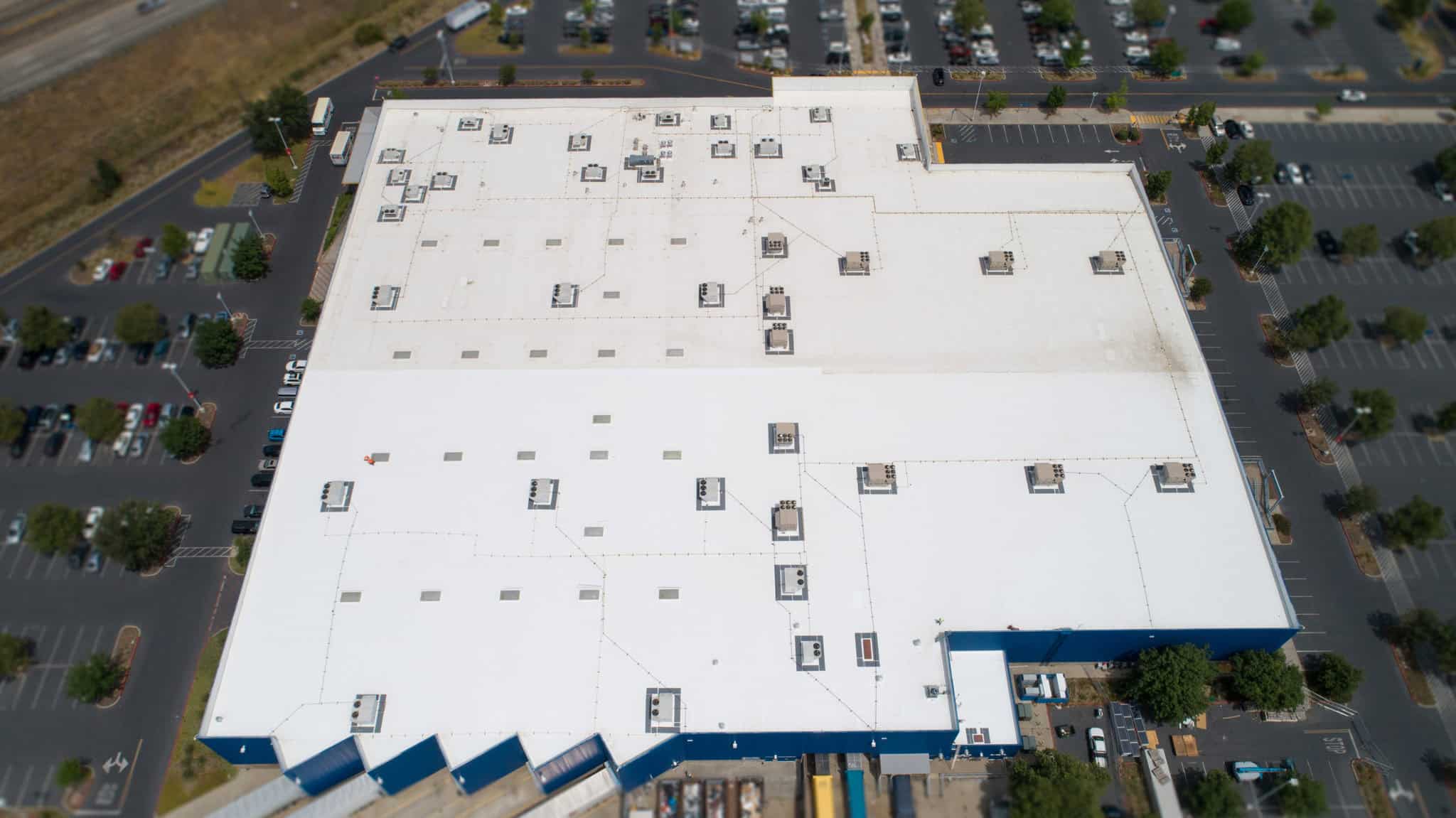
White TPO single-ply membrane is the dominant cool-roof choice for new construction in Pinellas County, and for good reason. It combines high initial reflectivity (typically 0.82 to 0.87 Solar Reflectance) with the weldable seam technology and Florida Building Code-compliant mechanical attachment options required in St. Pete's wind-load environment. TPO's reflectivity does degrade over time as the membrane surface accumulates biological growth — algae and lichen growth is accelerated in subtropical humidity — but routine cleaning with mild cleaners restores most of the original reflectivity. ENERGY STAR qualification requires minimum reflectivity of 0.65 after three years of weathering, and quality TPO systems maintain that standard well past the three-year mark with basic maintenance.
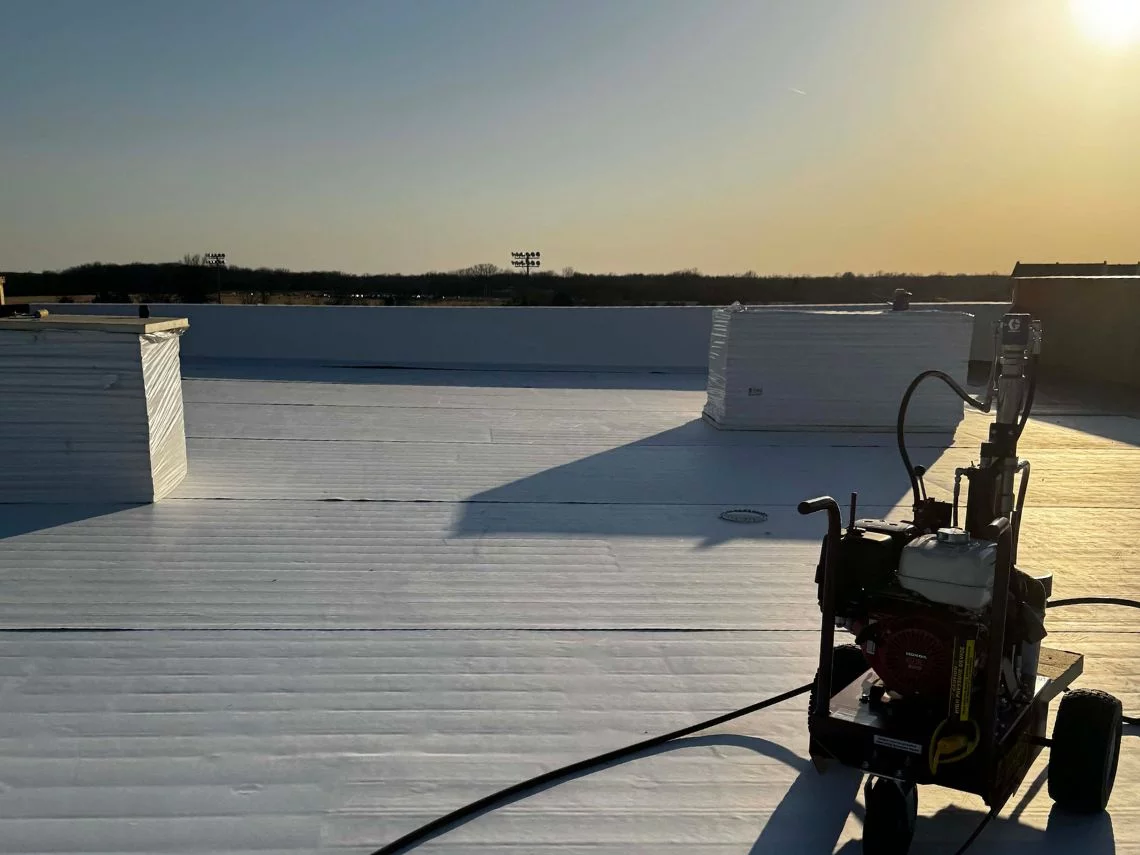
Silicone roof coatings offer the most straightforward path to cool-roof performance on existing commercial buildings that need membrane restoration rather than full replacement. A properly applied white silicone coating over an existing TPO, modified bitumen, or built-up roof can achieve initial reflectivity values of 0.85 or higher at a fraction of the installed cost of a full membrane replacement. For warehouse and light-industrial buildings on Ulmerton Road, in the Gateway area, or in Pinellas Park where the existing membrane has adequate structural life remaining but has lost reflectivity through weathering and surface oxidation, a coating upgrade is often the highest return-per-dollar energy improvement available to the building owner.
PVC roofing offers an alternative cool-roof membrane with chemical resistance advantages that are valuable in specific St. Pete commercial applications — restaurant and food service buildings along Central Avenue and 4th Street, hospital cafeteria kitchen buildings near Bayfront Health, and industrial buildings with chemical exhaust exposure. PVC's reflectivity profile is similar to TPO, and its characteristic bright white finish maintains high SRI values over its service life. The combination of cool-roof energy performance and chemical resistance to grease exhaust makes PVC a frequently specified option for occupied food-service rooftops in the urban commercial corridors of downtown St. Pete.
The Florida Green Building Coalition (FGBC) commercial certification program recognizes cool-roof installation as a contributing point category for FGBC-certified commercial buildings. ENERGY STAR Building certification for commercial properties in the Environmental Protection Agency's Portfolio Manager system credits cool-roof installation as an energy efficiency improvement. For Pinellas County commercial property owners managing LEED-certified or sustainability-rated assets in the Carillon Business Park or the downtown Innovation District, cool-roof upgrades generate certifiable performance improvements that support ongoing sustainability reporting requirements.
Utility rebate programs relevant to St. Pete commercial properties vary by year and program availability, but both Duke Energy Florida and TECO (Tampa Electric) have historically offered commercial efficiency rebate programs covering energy-efficient building envelope improvements including roofing. Property owners pursuing cool-roof installation should request current rebate availability at the time of their project planning — program terms and rebate amounts change annually. We can connect clients with current program contacts for their specific utility service territory as part of the project planning process.
One important qualifier for St. Pete cool-roof installations is the ponding water condition that affects many flat commercial roofs in this high-rainfall market. A white TPO or white-coated membrane that holds standing water develops biological growth — algae films — on its surface much faster than a well-drained membrane. That biological growth reduces reflectivity and requires periodic cleaning to restore performance. Addressing drain conditions and surface slope deficiencies as part of a cool-roof installation — rather than simply applying a reflective surface to an existing poorly-draining roof — produces measurably better energy performance and longer reflectivity retention over the system's service life.
Questions Owners Ask
How much will a cool roof actually reduce my energy bill in St. Petersburg?
Studies of commercial building energy performance in Florida's hot-humid climate zone consistently find cooling load reductions of 10 to 25 percent for commercial buildings upgraded from dark to high-reflectivity roofing, depending on existing insulation levels, building geometry, and HVAC system efficiency. For a typical 20,000 square-foot commercial building spending $2,000 to $4,000 per month on electricity during peak cooling season, that translates to annual savings of $2,500 to $10,000 depending on specific building characteristics. Actual savings vary — buildings with high existing insulation R-values see smaller proportional improvements than poorly insulated ones.
Does ENERGY STAR or another program certify cool roofing products for commercial use?
Yes. ENERGY STAR certifies low-slope commercial roofing products meeting minimum Solar Reflectance (0.65 initial, 0.50 aged) and Thermal Emittance (0.90) thresholds. The Cool Roof Rating Council (CRRC) provides independent testing and rating of roofing product radiative properties. CRRC-rated product listings are the standard reference for specifying ENERGY STAR-qualifying roofing in Florida commercial projects. We specify products from the CRRC Product Rating Program database and can provide product data sheets showing initial and aged reflectivity ratings for any system we propose.
Is cool roofing a good investment for a building I plan to sell in the next few years?
Yes, for two reasons. First, the energy savings during your ownership period are real and immediate. Second, a documented cool-roof installation — particularly ENERGY STAR-rated or FGBC-certified — adds a quantifiable attribute to a commercial real estate marketing package that matters increasingly to institutional buyers and lenders who assess building operating cost profiles in underwriting. In Pinellas County's competitive commercial real estate market, a well-documented cool-roof upgrade is a legitimate value-add in a sale scenario.
How does St. Pete's humidity affect cool roof performance over time?
Subtropical humidity contributes to biological growth on reflective membranes — algae, lichen, and biofilm develop faster on flat commercial roofs in Florida than in drier climates. This growth, if not managed, reduces SRI values over time. The practical solution is periodic roof washing — typically every two to three years — using mild detergent solutions that remove biological growth without damaging membrane integrity. Some roofing manufacturers offer antimicrobial-treated membrane surfaces with better biological-growth resistance. We can specify these options on new installations and advise on appropriate cleaning intervals for existing cool-roof systems.
Can I install a cool roof coating over my current dark-colored modified bitumen or BUR?
Yes, silicone and elastomeric acrylic coatings applied over APP modified bitumen or smooth-surfaced BUR convert a dark membrane to a reflective surface at a fraction of full replacement cost. The substrate must be structurally sound, with dry insulation confirmed by core cuts. A coating installed over wet insulation provides no meaningful energy benefit and will fail prematurely as trapped moisture cycles in Florida's heat. Our pre-coating assessment protocol confirms substrate condition before any coating recommendation is finalized.
 Commercial Roof Repair in St. Petersburg | Planned & Emergency
 Commercial Re-Roofing
 Occupied Building Re-Roofing
 Roof Recover and Overlay