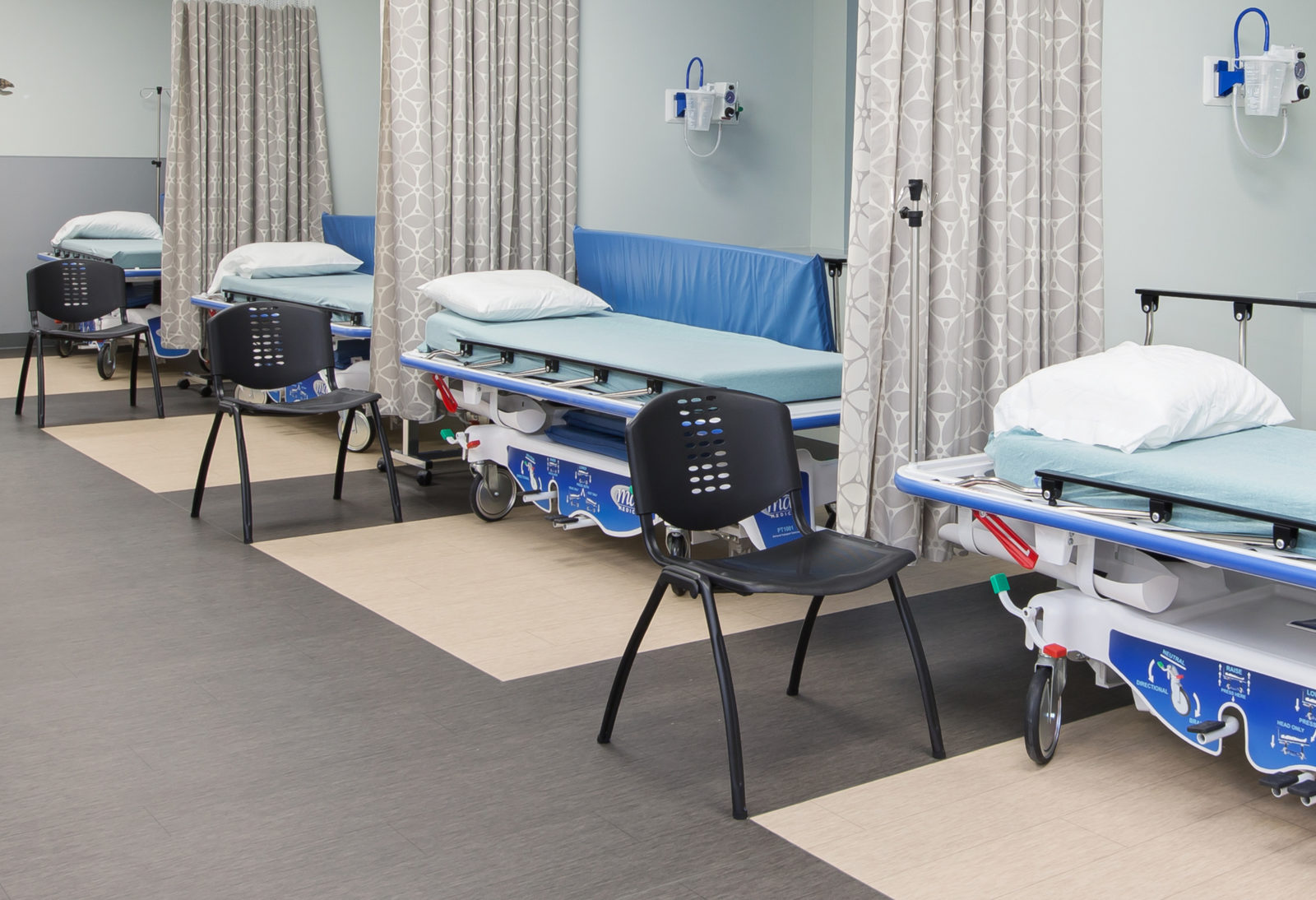
St. Petersburg occupies a peninsula that juts into Tampa Bay, a geography that gives healthcare facilities in Pinellas County some of the most challenging roofing exposure conditions in Florida. Johns Hopkins All Children's Hospital on Fourth Street South anchors the city's pediatric care infrastructure, while Bayfront Health St. Petersburg, St. Anthony's Hospital, and Palms of Pasadena Hospital serve the adult population across a network of campuses whose proximity to open water means that wind-driven rain, salt air corrosion, and hurricane threat combine into a roofing maintenance environment that demands more than the standard commercial inspection approach. Every hospital bed, surgical suite, and pharmacy room in St. Petersburg sits beneath a roofing system that must perform flawlessly through a six-month Atlantic hurricane season and the year-round humidity that never fully recedes from this subtropical peninsula.
Hurricane wind exposure is the defining design parameter for healthcare roofing in St. Petersburg, and Florida Building Code requirements for Pinellas County reflect this reality. Healthcare facilities classified as essential facilities under the FBC must meet enhanced wind uplift resistance requirements that exceed standard commercial building standards, with roofing systems tested and approved for the wind speeds associated with major hurricane events. After Hurricane Irma's 2017 track brought tropical storm conditions through the Tampa Bay region, numerous Pinellas County medical buildings discovered that aging roofing assemblies that had met code standards at the time of installation no longer met current requirements for re-roofing projects—creating a regulatory driver for system upgrades that combined with the physical damage to justify full replacement at many campuses. Healthcare facility managers who have not reviewed their roofing system's current FBC compliance status against post-Irma code updates should do so before the next named storm threatens the peninsula.
Salt air corrosion is a maintenance liability that St. Petersburg healthcare facilities face more aggressively than inland Florida markets because the bay and gulf exposure means that chloride-laden air contacts rooftop metal components continuously rather than intermittently. Metal drain bodies, overflow scuppers, HVAC equipment bases, flashing materials, and fastener heads all experience accelerated oxidation in this environment. At Johns Hopkins All Children's and Bayfront Health, where rooftop HVAC systems must provide precisely conditioned air to pediatric intensive care units and surgical suites, equipment base corrosion that eventually compromises the weatherproofing around mounting curbs represents a direct patient safety infrastructure concern, not merely a maintenance cost. Specifying marine-grade aluminum, stainless steel fasteners, and corrosion-inhibiting coatings for all metal roofing components from the outset prevents the replacement costs that standard commercial-grade materials incur within five to eight years of installation.
Infection control requirements for roofing work at St. Petersburg healthcare facilities follow Florida Agency for Health Care Administration construction standards and the specific ICRA protocols maintained by each health system. Johns Hopkins All Children's Hospital, as a pediatric specialty center that serves immunocompromised cancer patients and post-surgical children, maintains particularly stringent infection control requirements for any construction activity near occupied clinical areas. Pre-construction ICRA permits, negative pressure containment in work zones above patient floors, and post-work air quality clearance inspections are mandatory at this facility, and the contractor's ability to document compliance with these requirements is reviewed by the hospital's infection prevention committee before work authorization is granted. A contractor without verifiable pediatric hospital infection control experience should not attempt to bid on roofing work at this campus.
Medical gas penetrations at St. Petersburg hospital facilities are complicated by Florida's humidity-driven sealant degradation that affects all exterior waterproofing products in this climate. The combination of daily temperature cycling between night and day extremes, persistent high humidity that never drops to the levels that allow sealant materials to fully cure, and salt air chemical attack creates an environment where boot seals and pipe penetration caulking fail significantly faster than manufacturer service life estimates based on temperate climate testing. For Pinellas County healthcare facilities, penetration seal inspection and replacement should be on a five-year rather than ten-year cycle, with any facility within two miles of open water on an even more aggressive schedule that reflects the elevated salt air exposure.
The medical office and ambulatory care building inventory in St. Petersburg has expanded along the U.S. 19 corridor north of the city, in the Tyrone Boulevard medical district, and along 9th Avenue North near Palms of Pasadena Hospital. These mid-rise medical office buildings and surgical centers face the same hurricane and salt air challenges as the full-service hospitals but typically have smaller facilities management teams with less roofing-specific expertise. When a Category 1 hurricane passes within fifty miles of St. Petersburg—an event that occurs in some form nearly every few years in the Tampa Bay region's modern storm history—these buildings need post-storm inspection within forty-eight hours to document any membrane displacement, granule loss, or flashing separation before insurance claim deadlines begin to run. Roofing contractors with established emergency response capacity in Pinellas County are a critical relationship for healthcare property managers in this market.
Assisted living facilities are among the most numerous healthcare building type in Pinellas County, reflecting the county's position as one of Florida's most concentrated retirement destinations. The barrier island communities of Indian Rocks Beach, Treasure Island, and Madeira Beach host assisted living and independent living buildings that face the maximum salt air and storm surge exposure of any healthcare property type in the region. For memory care and skilled nursing facilities in these coastal zones, roofing system selection must account for FEMA flood zone requirements that may govern base elevation and rooftop equipment placement, in addition to the standard wind uplift and weatherproofing requirements. Facilities with flat roofs below certain elevations may additionally need to consider drainage system capacity for surge conditions, not just rainfall events.
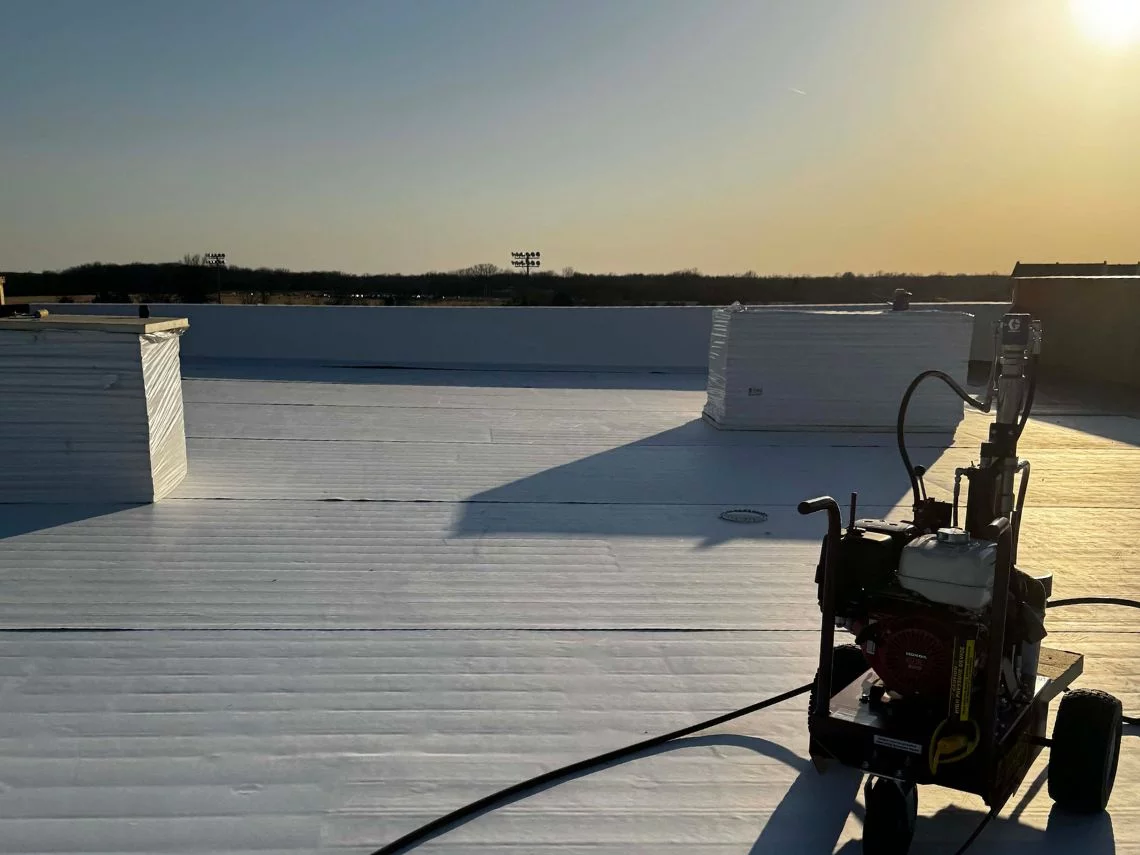
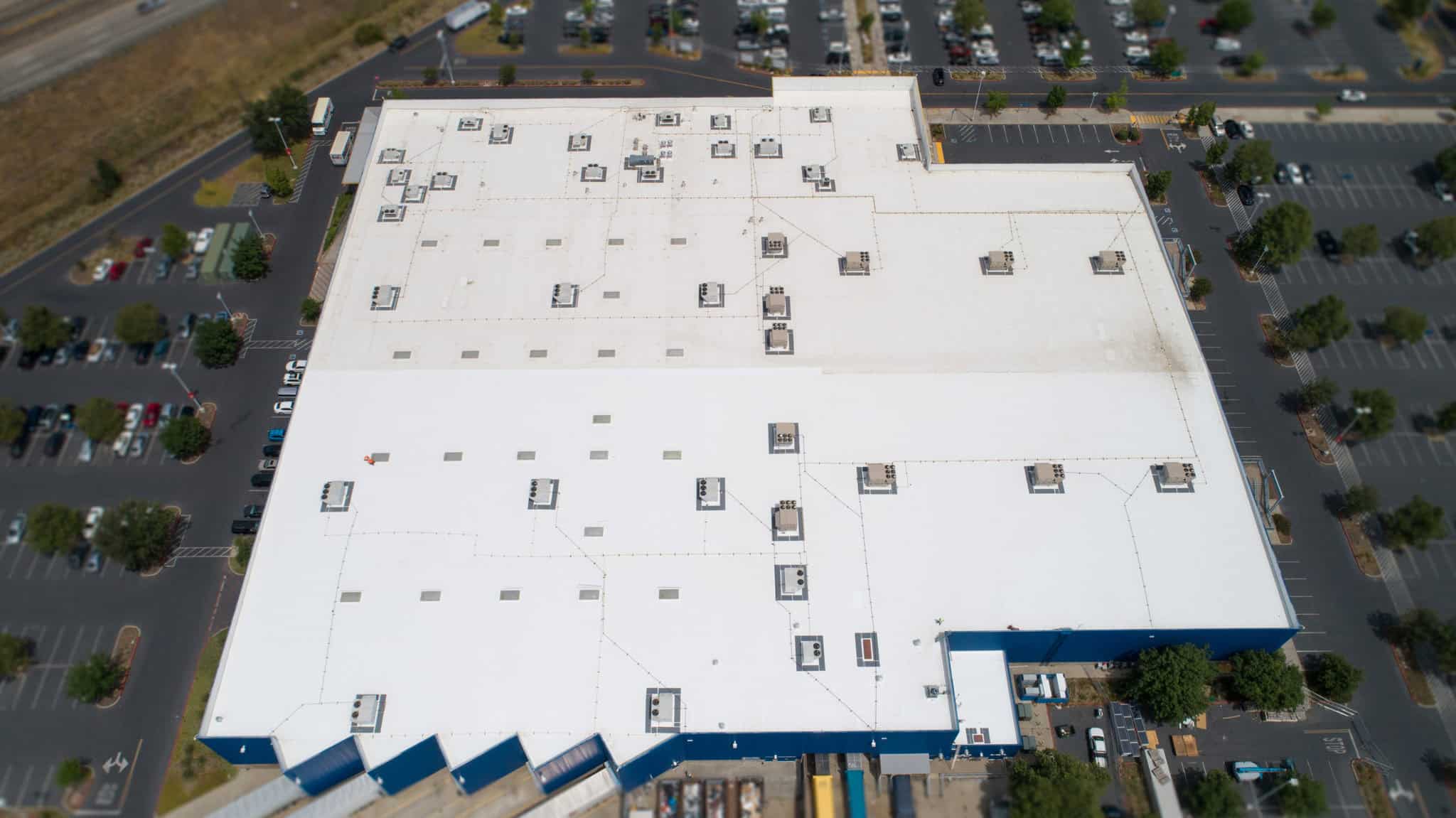
Energy efficiency at St. Petersburg healthcare facilities is supported by Duke Energy's commercial cool roof rebate program and driven by the year-round cooling load demands of a climate where air conditioning operates essentially without interruption. A hospital that replaces a dark-surfaced modified bitumen roofing system with a white TPO or PVC membrane reduces peak rooftop surface temperatures by forty to sixty degrees during Florida summer afternoons, directly lowering the heat gain transmitted through the roof assembly to the ceiling space below. For pediatric hospitals and maternity wards where precise temperature control directly affects patient outcomes, this reduction in thermal load through the roof assembly has clinical as well as economic value, and facility managers at Johns Hopkins All Children's have recognized this relationship in their capital infrastructure planning.
Selecting a roofing contractor for a St. Petersburg healthcare facility requires verification of Florida contractor licensure with DBPR, completed ICRA training for site supervisors, Florida Building Code product approval documentation for all proposed materials, and verifiable references from Pinellas County or Tampa Bay area healthcare clients. For facilities within the coastal high-velocity wind zone—which includes essentially all of St. Petersburg's peninsula geography—the roofing assembly must carry Florida Building Code product approval numbers that confirm testing to the applicable wind speed requirements. Contractors who cannot produce these product approvals for proposed materials are not legally authorized to install those systems in the high-velocity wind zone, a compliance detail that eliminates a meaningful proportion of the general commercial roofing contractor population from consideration.
- Why are salt air corrosion rates higher at St. Petersburg healthcare facilities than at inland Florida hospitals?
- St. Petersburg's peninsula geography means that prevailing breezes consistently carry chloride-laden air from Tampa Bay and the Gulf of Mexico across essentially every rooftop in the city, with no geographic barrier to reduce salt content before it contacts roofing metals. Inland Florida facilities benefit from chloride concentration reduction over land distance, but St. Petersburg buildings—especially those on the west side of the peninsula—experience near-coastal salt exposure regardless of their street address. Marine-grade material specifications are necessary rather than optional for any metal component in the roofing assembly at Pinellas County healthcare facilities.
- What Florida Building Code requirements apply specifically to essential facility healthcare buildings in Pinellas County?
- Healthcare facilities classified as essential facilities under the FBC must meet enhanced wind uplift resistance requirements that reflect the higher wind speed design values applied to buildings that must remain operational during and after hurricane events. Re-roofing projects at these facilities must use materials with Florida Building Code product approval numbers confirming testing to the applicable wind speed, and the attachment method must meet the approved fastener pattern for the product. Facilities in Pinellas County's coastal high-velocity wind zone face the highest wind design requirements in the state, and non-compliant roofing systems discovered during a licensing inspection can trigger mandatory replacement orders.
- Why should St. Petersburg healthcare facilities inspect roofing penetration seals on a five-year cycle rather than the standard ten-year interval?
- Florida's year-round humidity combined with salt air chemical exposure degrades sealant materials—silicone, urethane, and polyurethane caulk systems—significantly faster than the temperate climate conditions on which most manufacturer service life estimates are based. Boot seals and pipe penetration caulking in the St. Petersburg environment can reach end of functional service life within five to seven years of installation, meaning a ten-year inspection cycle will miss the failure window entirely. For facilities within two miles of open water, the combined salt air and UV exposure is severe enough to justify a three-to-four-year inspection cycle for all penetration sealant conditions.
- What post-hurricane inspection timeline applies to Pinellas County healthcare roofing systems after a storm event?
- Commercial property insurance policies typically require that storm damage be reported within a specified window—often thirty to sixty days—with supporting documentation of the damaged conditions before repairs are made. For healthcare facilities that cannot delay roof repairs without risking clinical operations, this creates a documentation sequencing challenge: repairs must be made quickly to protect patients and equipment, but photographic and written documentation of pre-repair conditions must be completed before repairs begin. Engaging a roofing contractor who provides a documented post-storm inspection report with photographic evidence within forty-eight hours of the storm event satisfies both the operational urgency and the insurance documentation requirement.
- Are there specific requirements for assisted living facility roofing systems in Pinellas County's coastal flood zones?
- Assisted living facilities in FEMA Special Flood Hazard Areas in Pinellas County must comply with floodplain management requirements that may govern rooftop equipment minimum elevation, drainage system specifications, and building envelope design elements that affect flood insurance rating. For facilities considering a re-roofing project, the project architect and a flood zone compliance consultant should review whether the scope triggers any NFIP or local floodplain ordinance requirements. The Florida AHCA licensing renewal process for assisted living facilities may also evaluate building envelope condition, including roof integrity, as part of the triennial inspection cycle.
 Commercial Roof Repair in St. Petersburg | Planned & Emergency
 Commercial Re-Roofing
 Occupied Building Re-Roofing
 Roof Recover and Overlay