
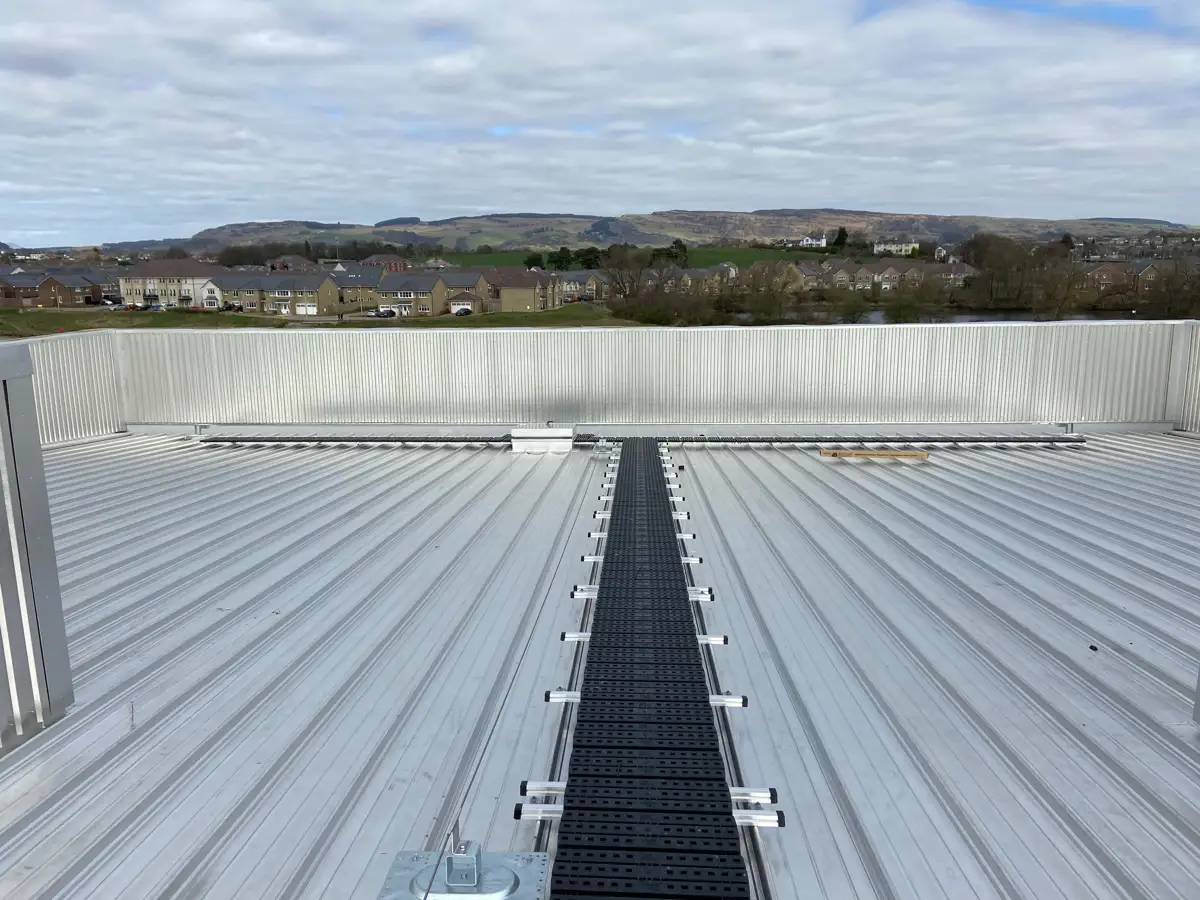
KEE — ketone ethylene ester — is the flexible thermoplastic polyolefin membrane that sits at the performance peak of the single-ply commercial roofing market, and it addresses a specific set of limitations that standard PVC and TPO membranes encounter in demanding exposure conditions. For industrial and chemical-process facilities in the Pinellas Park industrial corridor, logistics and aviation-related buildings near St. Pete-Clearwater International Airport, and any St. Pete commercial building with aggressive chemical discharge exposure, KEE's combination of weldable seam technology, extraordinary chemical resistance, and UV stability in subtropical heat makes it a compelling specification where standard single-ply options may fall short.
The technical distinction between KEE and standard PVC centers on plasticizer stability. Standard PVC single-ply membranes contain plasticizers — additives that give the membrane its flexibility — that can migrate out of the membrane over time, particularly in Florida's sustained high-UV and high-heat conditions. As plasticizers migrate, PVC becomes progressively more rigid, losing the flexibility needed to accommodate thermal cycling at penetrations and seams, and eventually developing brittleness and cracking that compromises waterproofing integrity. KEE membranes use ketone ethylene ester as an inherent component of the polymer backbone rather than as a separate plasticizer additive, eliminating the migration mechanism that degrades standard PVC in subtropical climates. The result is a membrane that retains flexibility and chemical resistance throughout its service life in St. Pete's conditions in a way standard PVC cannot match.
Chemical resistance is KEE's most commercially distinctive advantage over TPO for industrial applications. TPO provides excellent UV stability and cool-roof performance, but its resistance to hydrocarbon-based chemicals, solvents, and certain industrial process waste streams is limited. KEE membranes resist a wide range of chemicals including petroleum derivatives, many solvents, chlorine compounds, and acids at concentrations that would degrade TPO or accelerate EPDM aging. For a fuel storage or distribution facility near PIE airport, a chemical manufacturing or processing plant in Pinellas Park, or a commercial laundry or dry-cleaning facility with solvent exhaust exposure on the roof, KEE provides waterproofing integrity in the presence of chemical exposure that standard membrane options cannot reliably deliver.
Seam welding on KEE membranes uses the same hot-air welding technology applied to TPO and standard PVC, which means contractors trained on those systems can execute KEE installations with proper equipment and technique. The quality discipline of seam welding — substrate cleanliness, welder temperature calibration, probe width selection, and weld speed — matters as much for KEE as for any other heat-weldable system. In St. Pete's conditions, where summer humidity and afternoon thunderstorm season create challenging installation windows, the critical discipline is surface preparation before welding: a wet or contaminated seam area cannot be properly welded regardless of welder settings. KEE's chemical resistance is only as good as the seam quality, and seam quality is a field-discipline issue, not a product quality issue.
UV stability in Florida's subtropical solar environment is a genuine differentiator for KEE compared to standard PVC. Standard PVC's plasticizers absorb UV radiation in a way that accelerates plasticizer migration and surface chalking — a degradation sequence that is slow in northern climates but measurably faster in St. Pete's 361 days of annual sunshine. KEE's plasticizer-free chemistry eliminates the UV absorption pathway that drives this degradation. Field observations on Florida commercial roofing systems consistently show KEE installations retaining dimensional stability and surface integrity at 15-year ages where standard PVC installations have begun showing surface brittleness. That extended service life justifies KEE's cost premium over standard PVC in most St. Pete industrial applications where the chemical resistance or UV stability advantage applies.
Wind-uplift performance for KEE systems in Pinellas County follows the same specification discipline as any other single-ply membrane: mechanical attachment in a pattern calculated for the building's design wind speed and exposure category, with enhanced fastening density at perimeter and corner zones per current Florida Building Code requirements. KEE's greater thickness compared to standard TPO (60-mil KEE is common versus 45-mil standard TPO) provides some additional resistance to the seam peel-back that can initiate under hurricane wind loads, but attachment system design determines wind-uplift compliance — membrane thickness alone does not substitute for proper engineering of the fastening pattern.
The Airco Aviation Business Center and the commercial facilities serving PIE airport represent a category of St. Pete industrial use where KEE's performance profile intersects with the operational demands of aviation support — fuel handling, aircraft washing and degreasing, and maintenance chemical storage all create chemical exposure profiles that influence roofing membrane selection. We specify KEE as the default membrane for any airport-adjacent facility with documented chemical discharge or exhaust exposure to the roof surface, and assess standard TPO or PVC as appropriate only for facilities where the chemical exposure profile is clearly below KEE's threshold advantage.
For property owners managing industrial facilities anywhere in the Pinellas Park to PIE corridor, the decision between KEE and standard TPO or PVC should not be made on upfront material cost alone. The total cost of ownership over a 20-to-30-year membrane service life — including the probability and cost of premature membrane failure from chemical exposure or UV plasticizer degradation on a standard PVC system — often makes KEE the more economical choice even at its higher initial installed cost. We can prepare a comparative life-cycle cost analysis for your specific building and chemical exposure profile to support that decision with numbers rather than generalizations.
Questions Owners Ask
Is KEE roofing appropriate for standard office or retail buildings in St. Petersburg, or is it overkill?
For standard office, retail, or light-commercial buildings without chemical exposure or unusual UV-degradation risk, white TPO provides equivalent weatherproofing performance at a lower material cost and is the more economical specification. KEE's cost premium is justified when chemical resistance or extended UV stability in Florida heat specifically applies to the building's exposure conditions. We recommend KEE selectively for applications where those advantages are real, not as a default upgrade for any building where TPO or PVC will perform adequately.
How does KEE perform in St. Pete's hurricane wind conditions?
KEE's wind-uplift performance is determined by attachment system design, not by membrane type alone — the same statement applies to TPO or PVC. A properly designed KEE installation to current FBC Pinellas County requirements achieves the required uplift resistance for the building's wind zone. KEE's greater typical membrane thickness (60 mil versus standard 45-mil TPO) provides some additional resistance to seam peel-back under sustained hurricane wind loads, but the primary hurricane performance factors are attachment pattern density at perimeter zones and edge metal securement method.
What is the service life expectancy of KEE roofing in a Florida subtropical climate?
Properly installed KEE systems in Florida's climate have demonstrated service lives of 25 to 35 years in documented field observations, outperforming standard PVC systems in equivalent exposure conditions by approximately 5 to 10 years. The advantage is most pronounced in high-UV and chemical-exposure applications where standard PVC's plasticizer migration mechanism accelerates degradation. In low-exposure applications, the service life difference narrows and the additional cost of KEE over TPO may not be justified.
Can KEE be installed over an existing roof as a recover system?
Yes. KEE recover installations follow the same protocol as any single-ply recover: existing roof moisture content confirmed by core cuts, recovery board installed over the existing membrane to provide a clean substrate, and KEE mechanically fastened through the recovery board into the deck below. The moisture assessment step is critical — installing any new membrane system over wet insulation in Florida's climate guarantees accelerated degradation regardless of the membrane's inherent chemical and UV resistance.
How does KEE compare to silicone coating as a long-term roofing solution for a St. Pete industrial building?
KEE and silicone coating address different problems. KEE is a complete new membrane system — it replaces the entire waterproofing layer and provides chemical resistance and UV stability as an independent system. Silicone coating is applied over an existing membrane to extend its service life, restore reflectivity, and improve waterproofing integrity. If the existing membrane has adequate structural life remaining, silicone coating is almost always the more economical approach. If the existing membrane requires replacement or if the building's chemical exposure profile demands KEE's specific resistance characteristics, KEE as a new membrane is the appropriate choice.
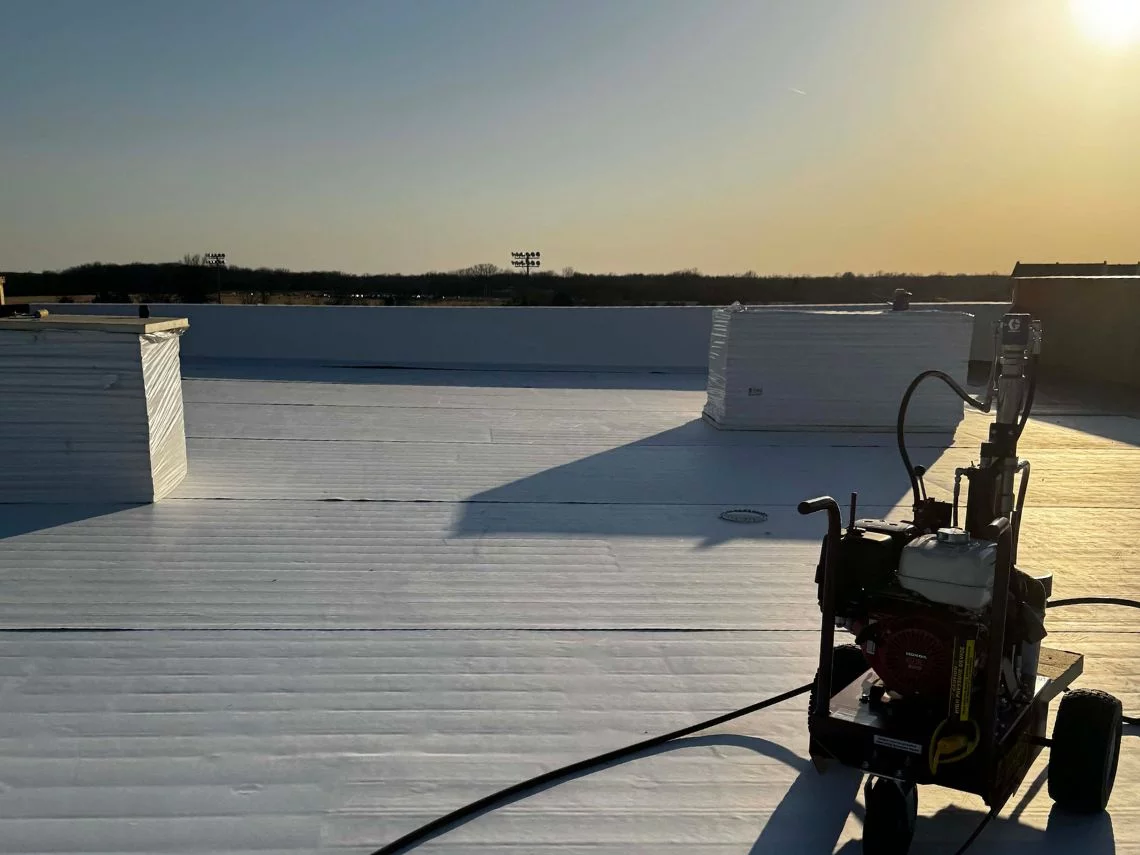 Commercial Roof Repair in St. Petersburg | Planned & Emergency
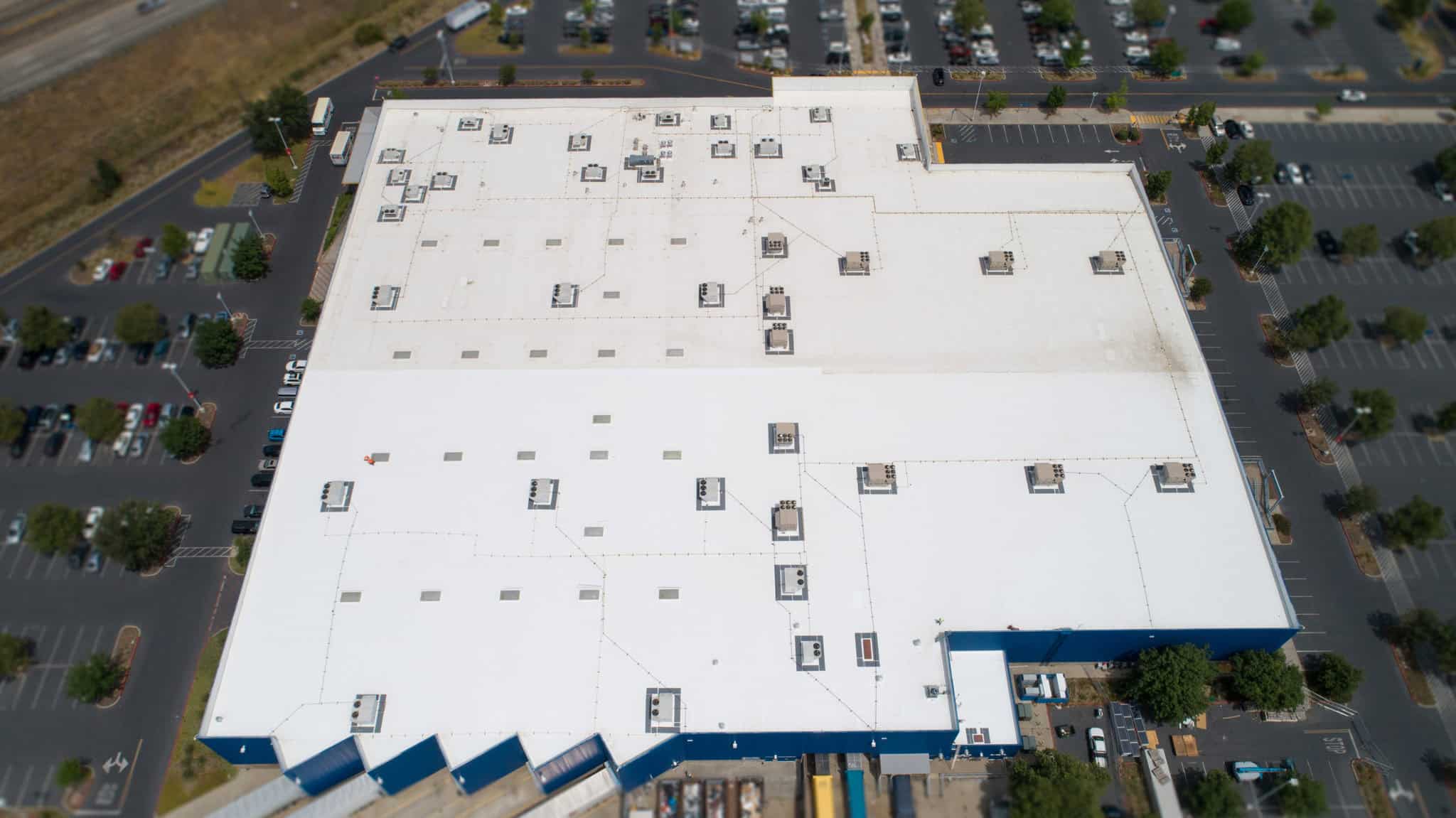 Commercial Re-Roofing
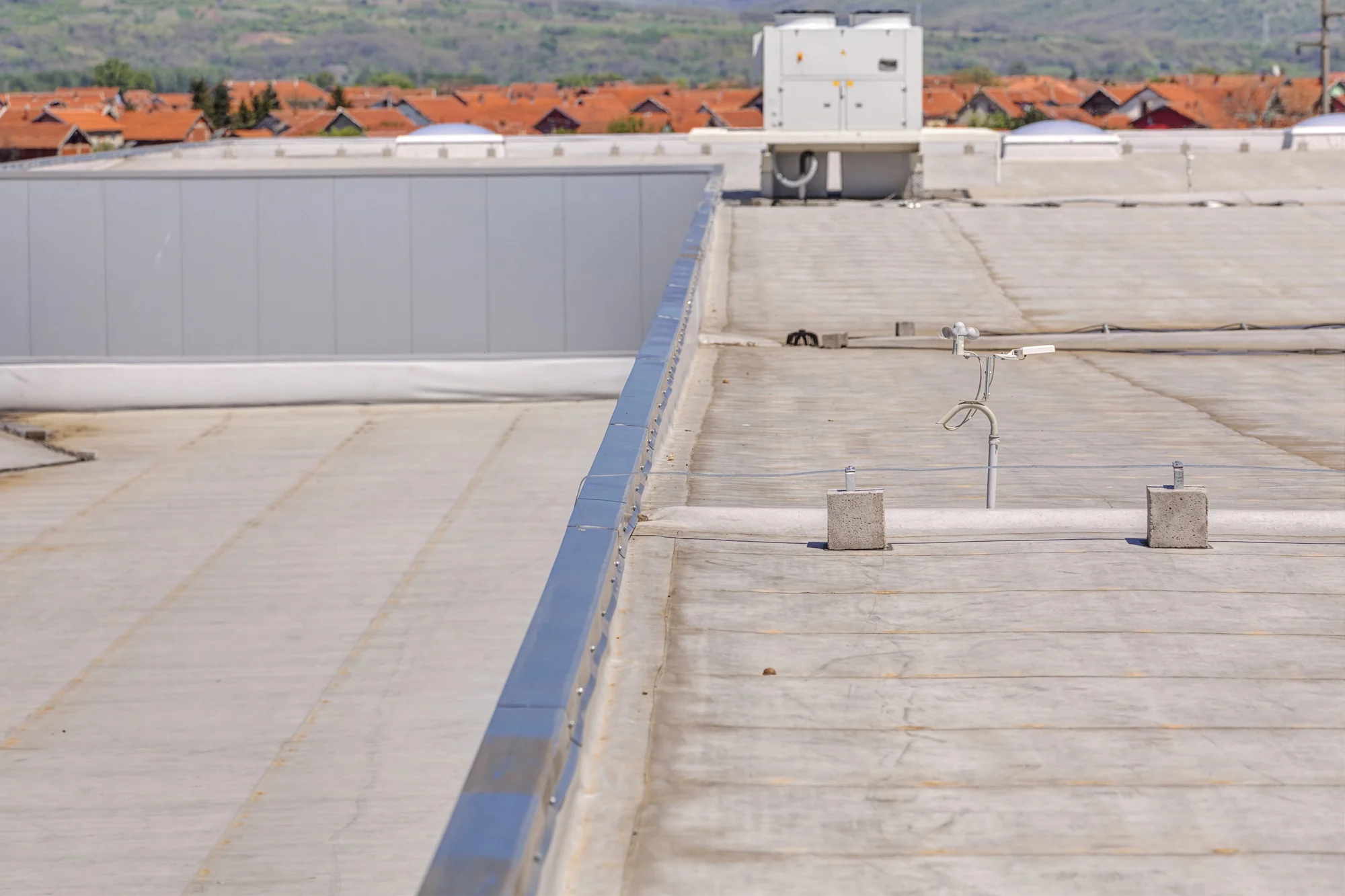 Occupied Building Re-Roofing
 Roof Recover and Overlay