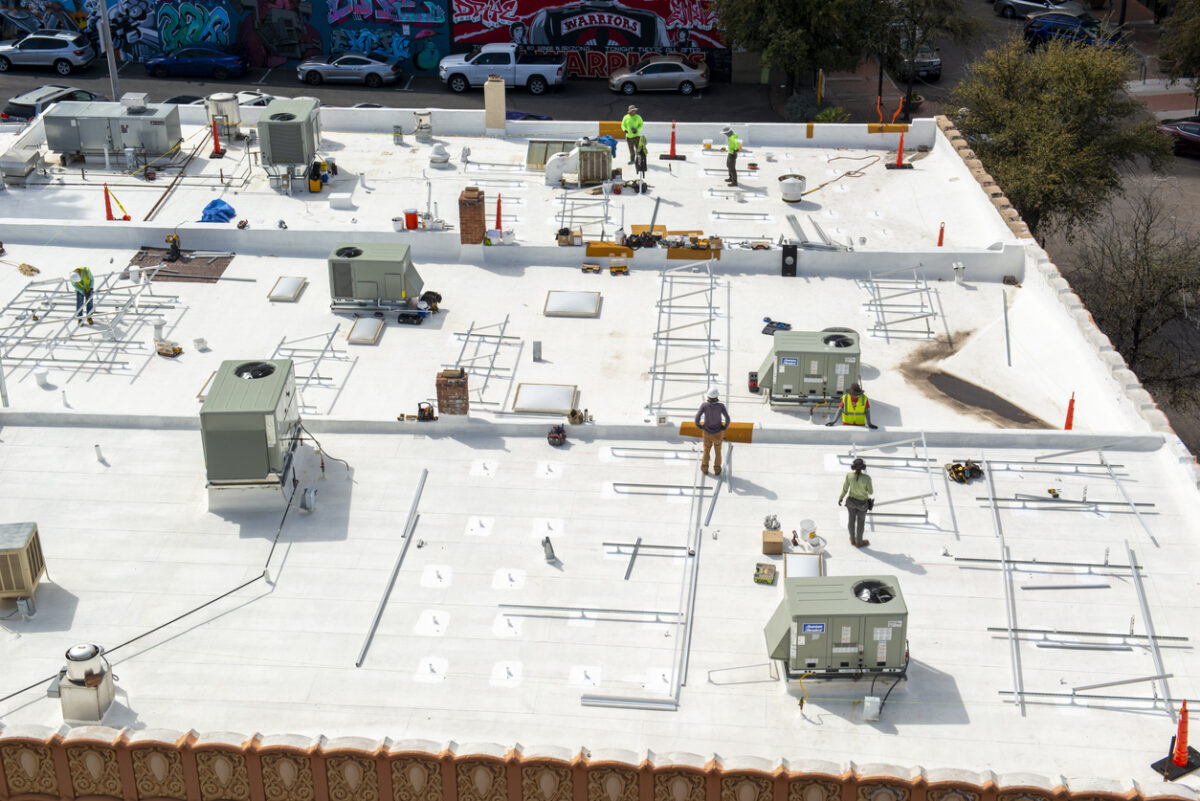
Jabil Inc., headquartered in St. Petersburg and operating large electronics manufacturing and supply chain management facilities across the Tampa Bay region, represents the highest-complexity commercial roofing customer in the St. Pete industrial market. Jabil's St. Petersburg facilities combine precision electronics assembly, packaging operations, and supply chain logistics under roofs where moisture intrusion, chemical cleaning exposure, and Florida's hurricane-force wind loads converge. The broader St. Pete industrial base—spanning food manufacturing, craft beverage production, and marine equipment fabrication—creates a diverse but technically demanding roofing market along Tampa Bay's western shore.
Electronics manufacturing at Jabil and similar facilities requires cleanroom-adjacent environments where particulate control during roofing construction is mandatory. We implement construction containment protocols that restrict adhesive and membrane cutting operations to areas where solvent and particulate migration into HVAC intakes is prevented, schedule hot-work activities with HVAC systems in recirculation mode, and conduct post-installation HVAC filter inspections before clients return intakes to normal operation. These steps are documented in our construction quality records and submitted with the project closeout package.
St. Petersburg's coastal location on Tampa Bay makes it one of Florida's most hurricane-exposed industrial markets. The bay's funnel geometry can amplify storm surge and wind speed for systems approaching from the south or southwest, making the design wind pressures for St. Pete roofing systems some of the highest in the state. We design all roofing assemblies to meet or exceed the High-Velocity Hurricane Zone requirements applicable to Pinellas County, use FM 1-60 or higher uplift-rated assemblies, and document wind resistance calculations for inclusion in the building file.
Chemical exposure from Jabil's electronics cleaning operations includes flux remover solvents, isopropyl alcohol, and specialty cleaning agents used in circuit board processing. These compounds may reach rooftop surfaces through exhaust systems or spill events near equipment access hatches. Standard TPO membranes resist most electronics cleaning solvents, but we specify solvent-resistant TPO formulations in high-exposure zones and install drip-edge collection channels around equipment access hatches to capture any spillage before it reaches the field membrane.
Vibration from conveyor systems, automated assembly equipment, and large cooling towers on Jabil's St. Pete facilities transmits cyclically into the roof assembly. The combination of vibration and Florida's thermal cycling—daily temperature swings of twenty to thirty degrees year-round—creates combined fatigue loading that shortens membrane life in mechanically fastened zones. We use fully adhered systems over vibration-heavy production areas, extending the adhered zone beyond the direct equipment footprint to account for the structural vibration propagation range.
Skylights and roof monitors in St. Petersburg industrial facilities must withstand hurricane impact in addition to performing standard weatherproofing functions. We specify impact-resistant polycarbonate glazing for all new and replacement skylight installations, use reinforced curb assemblies with hurricane-clip anchorage, and seal all glazing perimeters with ASTM-rated structural silicone designed for Florida's high-exposure coastal environment. Standard residential-grade silicone used by some contractors fails within two to three seasons in the UV and salt-air environment of Tampa Bay.
Florida's intense convective afternoon thunderstorms deliver rainfall intensities in St. Petersburg that can reach eight to ten inches per hour in localized events. Industrial roofs with undersized drainage systems back up rapidly under these conditions, creating temporary ponding loads that stress the roof structure and accelerate membrane fatigue at low points. We assess drain capacity against the ten-year rainfall intensity for the St. Petersburg area during pre-bid inspections and recommend supplemental drain installations where existing systems are undersized for the current climate event profile.
The marine industry presence in St. Petersburg—with boat manufacturing, repair facilities, and marine equipment suppliers throughout the Eckerd College-area industrial parks—creates a secondary roofing market characterized by salt air exposure, tall open-bay buildings with complex roof geometry, and fiberglass fabrication exhaust. We specify marine-grade stainless or aluminum components throughout, design drainage systems that manage the dust and particulate from fiberglass work, and use fully welded TPO seams rated for the continuous salt-air exposure that steel components cannot survive.
Post-hurricane roof recovery is a reality for every St. Pete industrial facility manager with roofing responsibilities. Our emergency response capabilities include tarping and temporary protection for storm-damaged facilities, rapid damage assessment, and priority scheduling for permanent restoration. We maintain material inventory, pre-qualified emergency labor crews, and carrier coordination experience that enables faster response than contractors who treat post-storm work as purely incidental to their standard project pipeline.
- What wind uplift rating is required for commercial roofs in St. Petersburg?
- Pinellas County's coastal exposure requires FM 1-60 minimum uplift resistance in most zones, with higher ratings at perimeters and corners; we document wind pressure calculations for every project and submit them with the building permit for plan review.
- How is impact resistance addressed for skylights in hurricane-prone St. Pete?
- Impact-resistant polycarbonate glazing with reinforced hurricane-clip anchorage and ASTM-rated structural silicone perimeter seals is required; residential-grade materials fail within a few seasons in the UV and salt-air environment of Tampa Bay.
- How do you handle roofing above active Jabil electronics assembly operations?
- Construction containment protocols restrict solvent and particulate migration into HVAC systems, with hot-work scheduling timed to recirculation mode and post-installation HVAC filter inspection before return to normal operation, all documented in the project quality record.
- What drainage capacity is needed for St. Petersburg's convective storms?
- Drain systems should be designed for the 10-year rainfall intensity for the St. Pete area, which can reach eight to ten inches per hour in convective events; undersized existing drains are identified during pre-bid inspection and supplemental installations are recommended where capacity is insufficient.
- What makes St. Petersburg's salt air environment challenging for roofing hardware?
- Tampa Bay's salt-laden atmosphere corrodes standard galvanized and painted steel components within two to three years; marine-grade stainless or aluminum is specified for all drains, flashings, curbs, and fasteners throughout the assembly to prevent corrosion-driven failures.
 Commercial Roof Repair in St. Petersburg | Planned & Emergency
 Commercial Re-Roofing
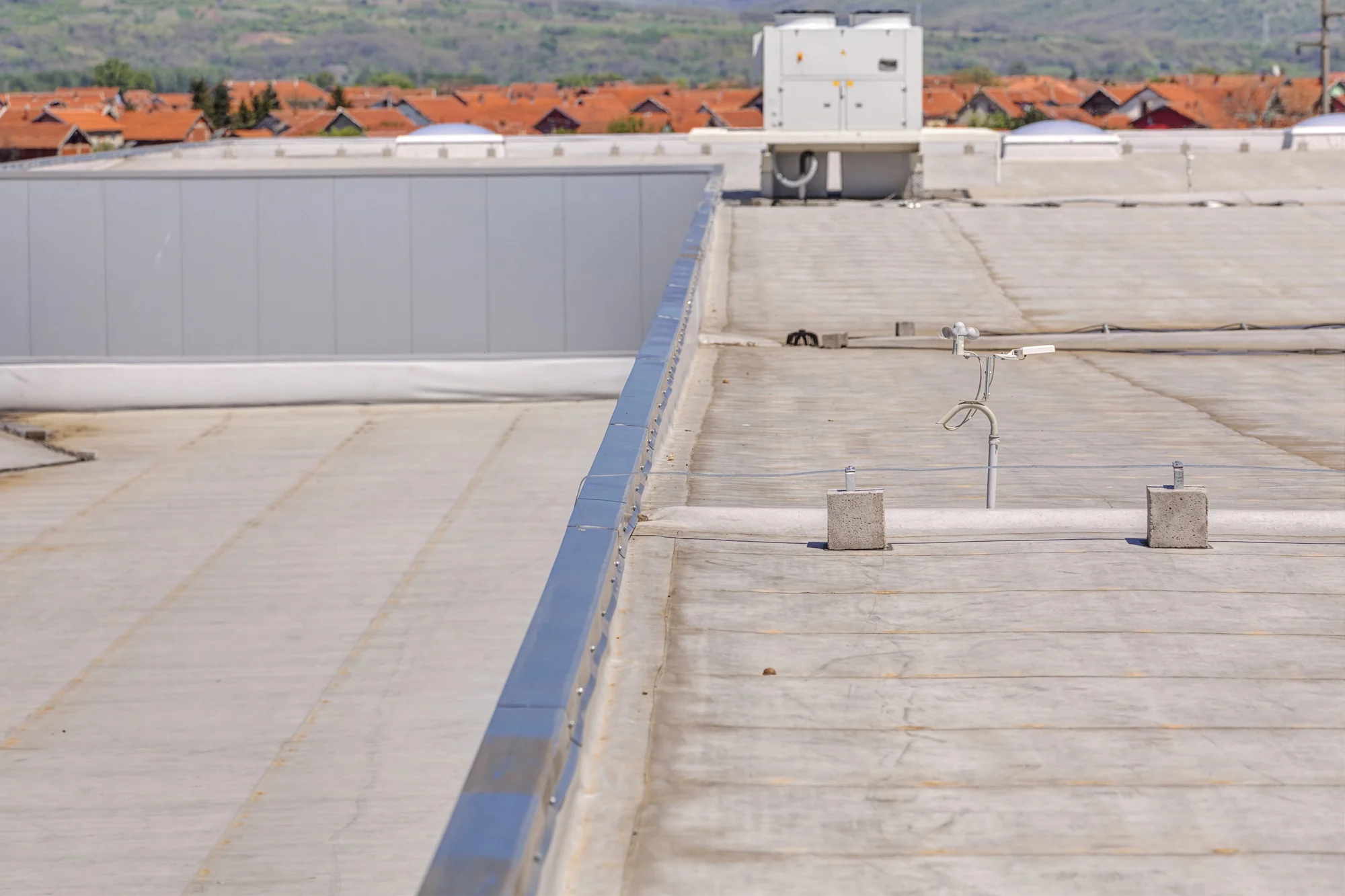 Occupied Building Re-Roofing
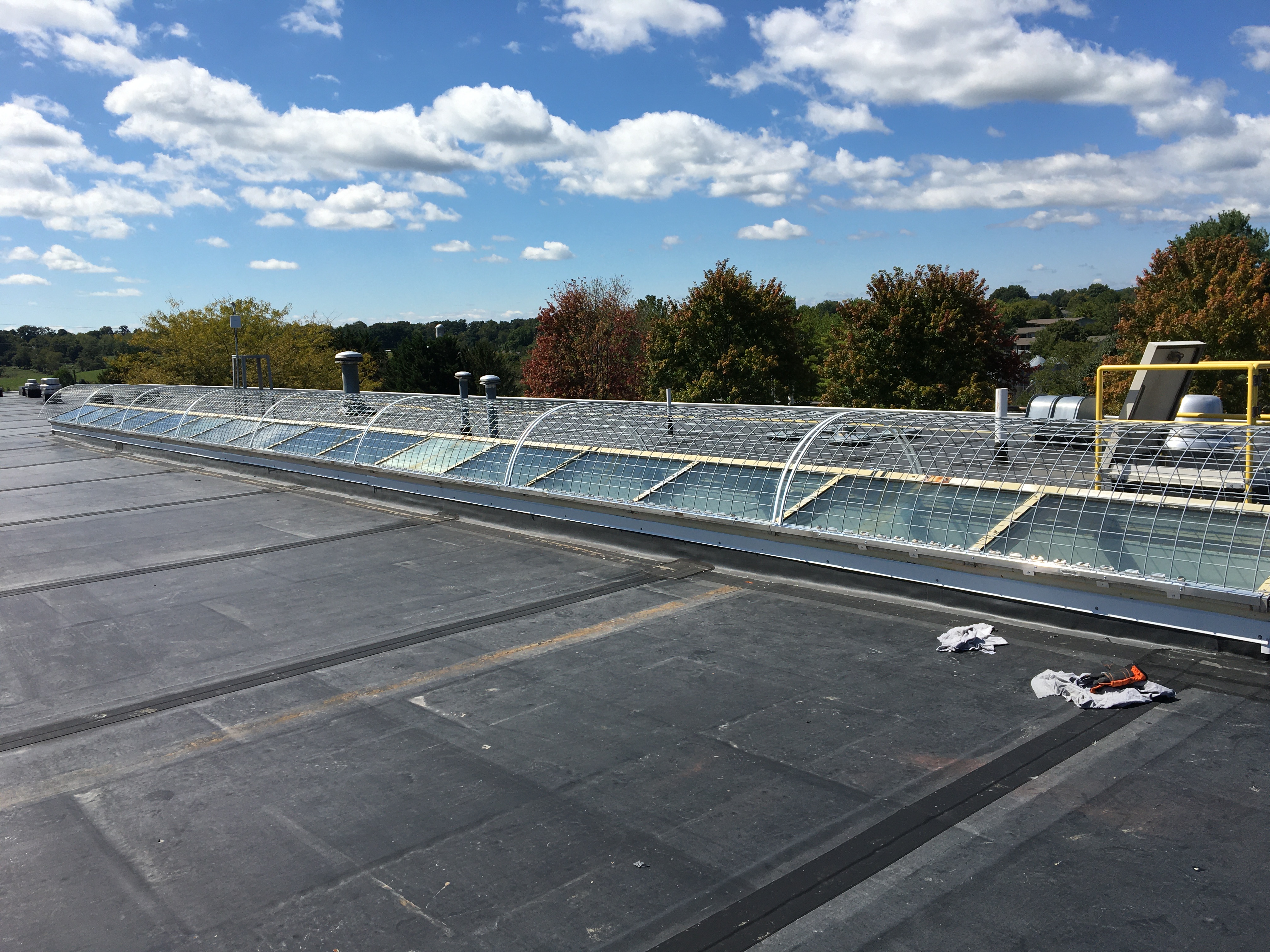 Roof Recover and Overlay