
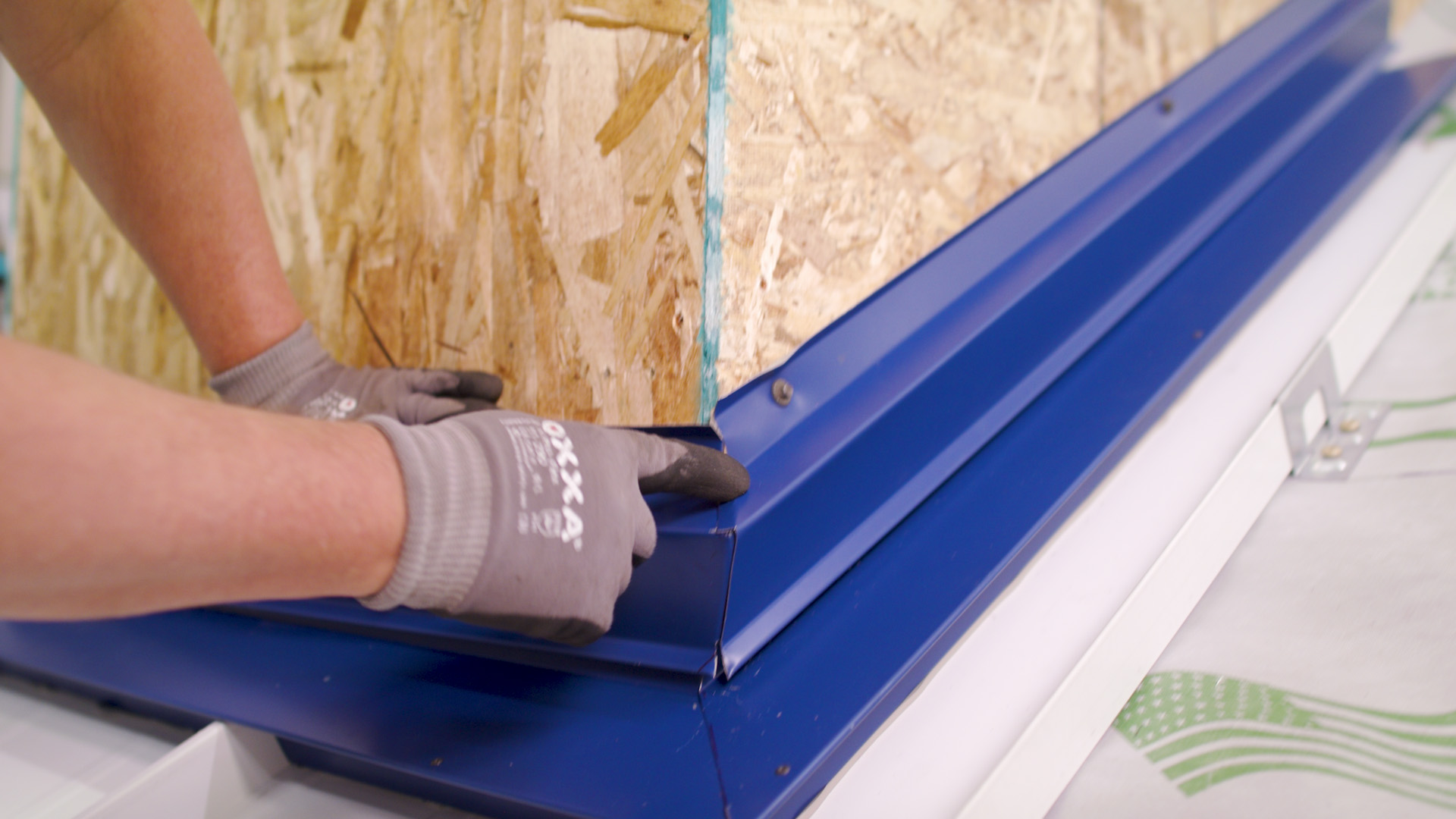
St. Petersburg's commercial rooftops carry some of the densest penetration populations in the Florida market. The active food, beverage, and hospitality economy along Central Avenue, the EDGE District, and downtown Beach Drive generates restaurant kitchen exhaust fans, makeup air units, grease duct penetrations, walk-in cooler refrigeration lines, and multiple HVAC curbs on relatively modest building footprints. Mixed-use buildings with retail below and office or residential above add elevator machine room exhausts, telecommunications equipment conduits, and gas supply risers to the penetration inventory. Each of these points where something passes through or terminates on a flat commercial roof is a potential entry point for St. Pete's 53.62 annual inches of rain — and a potential failure point during the sustained wind-driven rain of a hurricane event.
Flashing quality at penetrations is the single most common source of chronic commercial roof leaks in Pinellas County, and it is consistently underappreciated relative to the membrane system itself in roofing specifications and owner conversations. A perfect TPO membrane with compromised pipe boot flashings is a leaking roof. An aging modified bitumen system with meticulously maintained penetration details may be a dry building. The membrane receives the specification attention and the marketing focus; the flashings receive the maintenance neglect and the failure call volume. In St. Pete's climate, where every penetration is tested by afternoon thunderstorms on a near-daily basis in wet season, flashing integrity is not a secondary performance dimension — it is the primary one.
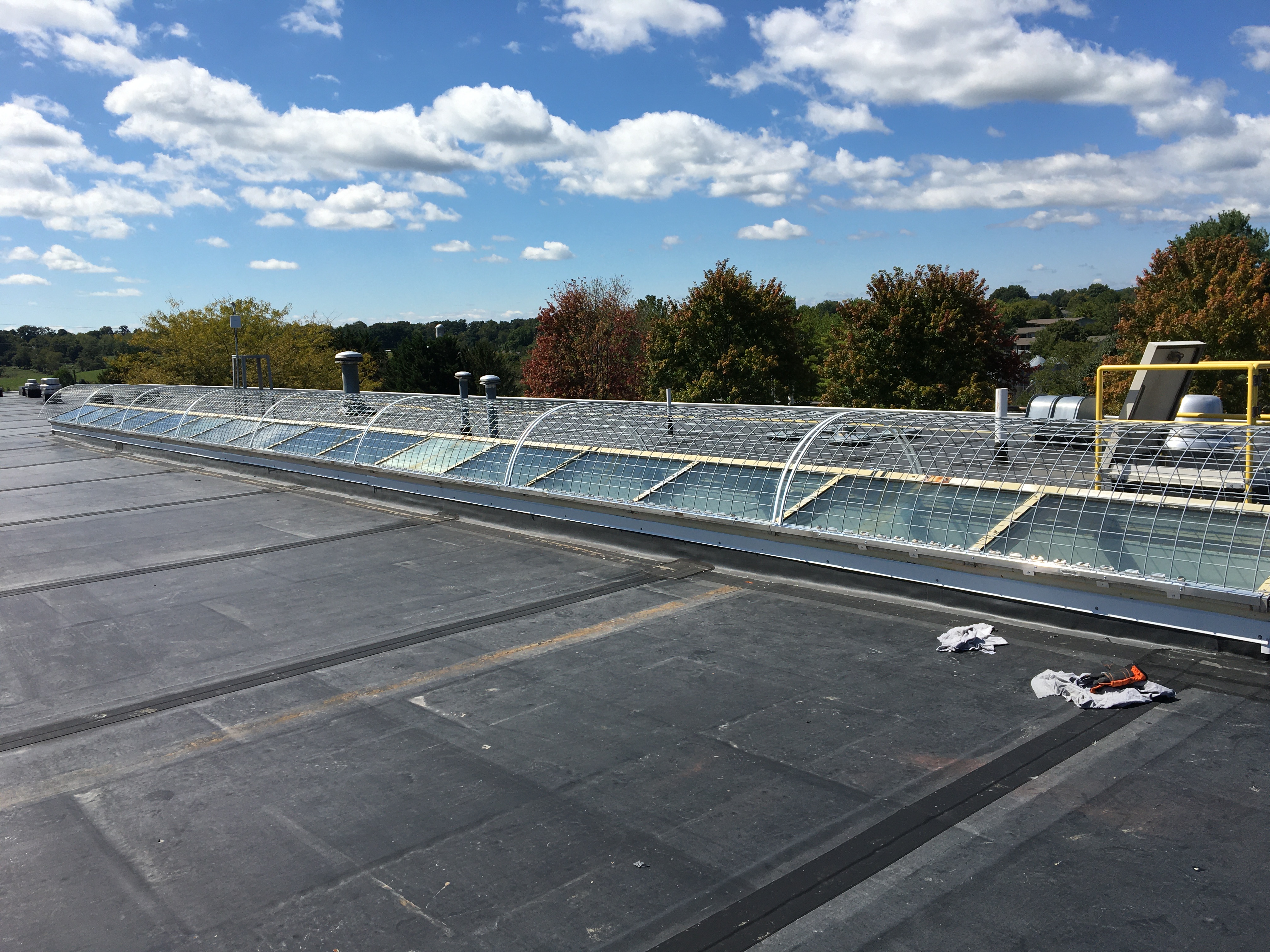
Skylight flashing is a specialized category within the penetration inventory that receives specific attention in hurricane planning for St. Petersburg commercial buildings. Skylights on mixed-use buildings, hospitality properties, and retail spaces in the downtown corridor introduce glass or polycarbonate panels into the roofing assembly at large openings that must remain watertight against vertical rainfall, wind-driven rain, and the pressure cycles generated by hurricane-force winds. Standard skylight curb flashing — a membrane-covered wood or metal curb with a counter-flashing cap — must carry the skylight glazing above the finished roof surface by at least eight inches under Florida Building Code, with the transition between roofing membrane and skylight curb sealed against the specific wind-driven rain conditions Pinellas County experiences during hurricane outer-band impacts.
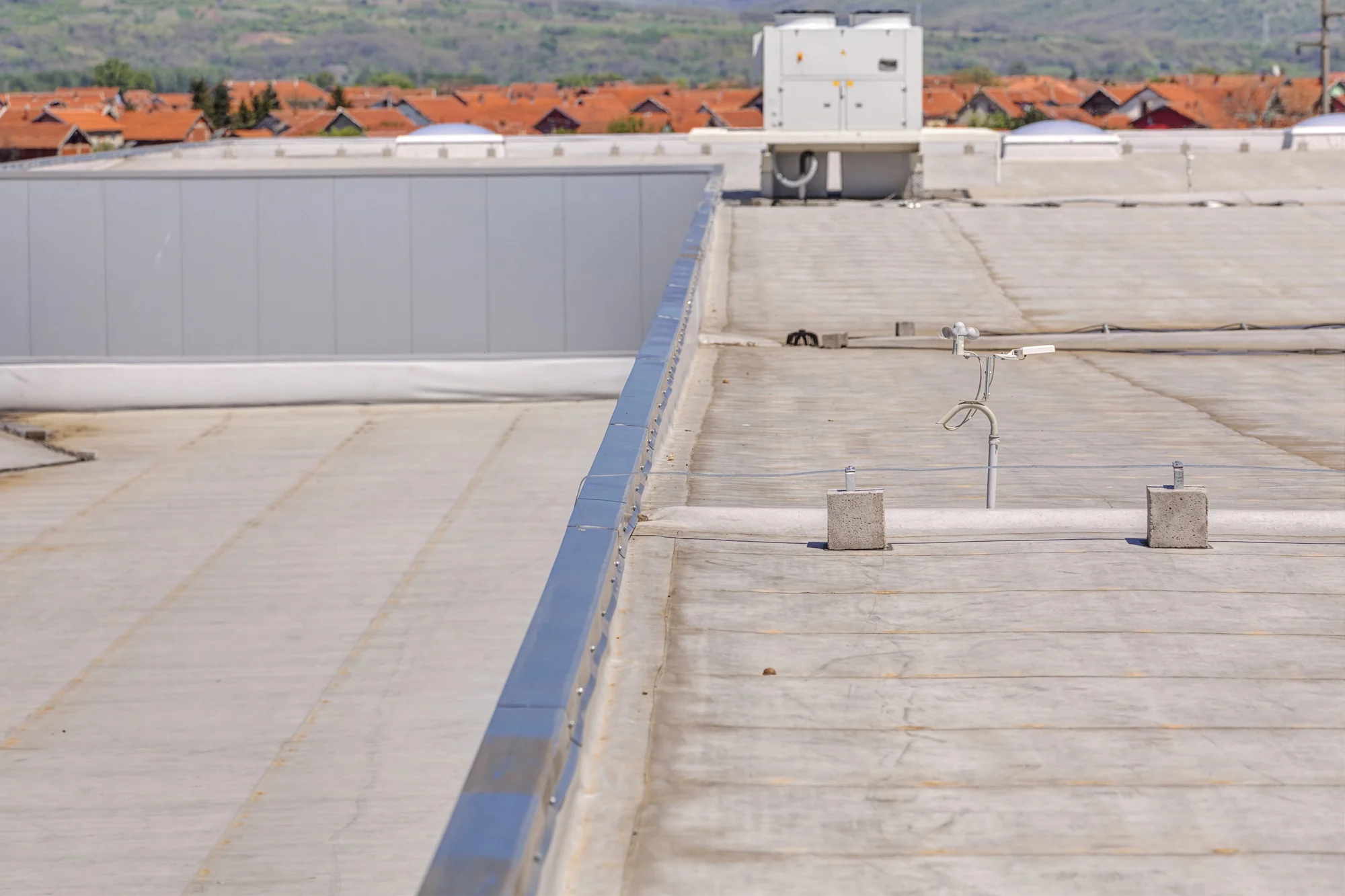
Curb flashing for HVAC equipment is the penetration category with the greatest combination of frequency and failure risk on St. Pete commercial rooftops. Rooftop HVAC units on commercial buildings in this market are heavy, vibration-generating, and installed on curbs that create thermal bridging points in the roof assembly. The flashing at the base of every HVAC curb must accommodate the movement between the roofing membrane and the curb framing as thermal cycling causes both to expand and contract at different rates throughout the year. In Florida's climate, where rooftop temperatures can swing 70 to 80 degrees between a cold January morning and a July afternoon, the cumulative thermal cycling stress on curb flashings is substantial. Flashings that were properly installed but not periodically inspected and maintained will eventually develop the micro-cracks and separation at membrane-to-curb transitions that become active leak sources.
Pipe penetration flashings — the circular, cone-shaped collars or pipe boots that seal around plumbing vents, refrigerant lines, gas pipes, and conduit penetrations — have a service life typically shorter than the membrane system they are installed on. EPDM pipe boots — rubber collars that stretch over pipe penetrations — degrade from UV exposure in Florida's subtropical sun and develop surface cracking within 8 to 12 years, even when the surrounding membrane remains in sound condition. Flexible lead or aluminum counter-flashing systems require sealant at the pipe contact interface, and that sealant requires inspection and periodic replacement as it UV-degrades over the same 5-to-7-year cycle that affects all outdoor sealant applications in Pinellas County. The economic case for including all pipe boot replacement in a recover or maintenance project — rather than replacing only the ones that are visibly cracked — is strong, because the labor cost of accessing each pipe boot individually in a future repair visit substantially exceeds the incremental material cost of replacing all of them during a scheduled project visit.
Salt air exposure accelerates metal flashing component degradation at coastal St. Pete locations in ways that inland Florida inspectors may not recognize. The lead counter-flashings and aluminum reglet assemblies used at wall and parapet transitions show early galvanic corrosion at dissimilar-metal contact points in a salt-laden coastal atmosphere. On barrier island buildings in St. Pete Beach and Tierra Verde, and on waterfront commercial buildings along Tampa Bay and Boca Ciega Bay, metal flashing components have substantially shorter corrosion-free service lives than the same components on inland Pinellas County buildings at equivalent ages. The standard service life assumptions for these components that work for most of Florida are insufficient for directly salt-exposed barrier island applications.
The relationship between penetration density and hurricane rain-infiltration risk is direct and quantifiable. A roof with 40 penetration flashings — a modest estimate for an active commercial kitchen and HVAC-served retail building in the Central Avenue corridor — has 40 potential hurricane-rain entry points if any flashing detail is compromised. Pre-hurricane season inspection specifically targeting penetration flashing integrity is not a comprehensive roof inspection luxury — it is a targeted risk management activity that addresses the most probable hurricane-rain entry mechanism for typical St. Pete commercial buildings. Identifying and resealing the five or six flashings that have reached or passed their service life before June 1 eliminates the most likely post-hurricane interior water damage scenarios at a fraction of the cost those scenarios would generate.
Historic downtown St. Pete mixed-use buildings present Skylight and Penetration Flashing challenges that are amplified by the age and irregularity of their roof structures. Original structural openings for skylights in historic buildings may have non-standard dimensions, non-plumb curb conditions, or incompatible materials at the deck-to-curb interface that require custom flashing fabrication rather than standard manufactured skylight flashing kits. Historic preservation review processes in St. Pete's downtown National Register districts may constrain material choices for visually exposed skylight components. We approach historic building skylight and penetration work with the additional planning and custom fabrication time these conditions require, rather than forcing standard product catalog solutions onto atypical field conditions.
Questions Owners Ask
How often should pipe boots and HVAC curb flashings be inspected on a St. Petersburg commercial building?
Annually, as part of the spring pre-hurricane-season maintenance visit. EPDM pipe boots on a St. Pete commercial building should be assessed at 8 to 10 years for surface cracking and planned for replacement — not just repaired with sealant on top of cracked rubber — because sealant applied over cracked EPDM does not create a durable waterproof interface in Florida's thermal cycling conditions. HVAC curb flashing sealant should be inspected annually and replaced whenever it shows open cracking, loss of adhesion to either the membrane or curb surface, or any separation at the membrane-to-curb transition.
My skylight is leaking. Is it the skylight itself or the flashing around it?
Both are possible, and distinguishing them requires careful examination before starting repair work. Glazing seal failures in the skylight frame — the perimeter sealant or gasket between the glass or polycarbonate and the frame — admit water at the glass surface that appears at the curb interior. Flashing failures at the curb-to-membrane transition admit water at the base of the curb that also appears below the skylight. The location of interior moisture staining relative to the skylight opening, and a careful probe examination of both the glazing perimeter and the curb flashing, are the diagnostic steps that distinguish the two failure types. Resealing the wrong location produces a temporary reduction in leakage but not a permanent repair.
Can I add a new rooftop HVAC unit to my building without affecting the existing roof warranty?
Adding a new HVAC curb and penetration after the original roofing installation can void warranty coverage for the new curb area if the work is not performed by the warranty contractor or an approved contractor using manufacturer-specified materials and methods. Most commercial membrane manufacturers require that any penetration work that adds to the original scope be performed by certified contractors using compatible materials, and that the work be reported to the manufacturer for warranty extension. Contact the original warranty holder before proceeding with any post-warranty penetration additions to understand the specific requirements for maintaining coverage.
What is the best sealant for pipe penetration flashings in St. Petersburg's climate?
For most single-ply membrane applications in Pinellas County, a 100% silicone sealant compatible with the specific membrane type provides the best combination of UV stability, adhesion retention in Florida's subtropical heat, and resistance to the thermal cycling that cures less durable products prematurely. Urethane sealants perform adequately but have shorter service lives under St. Pete's UV conditions than silicone. Butyl sealants are used in specific applications where silicone compatibility is a concern. Membrane-type and substrate-specific sealant selection is critical — not all silicone sealants are compatible with all membrane types, and incompatible sealant-to-membrane contact can cause membrane degradation.
My commercial building has over 30 roof penetrations. Do all of them need to be inspected or just the ones near known leaks?
All of them should be inspected at the annual maintenance visit. Penetration flashings do not fail uniformly or predictably — UV exposure, contact with exhaust, traffic damage from maintenance personnel, and original installation quality all vary by location in ways that don't correlate perfectly with proximity to known leak sources. A thorough annual penetration inventory inspection catches the three or four flashings that are approaching failure before they become active leaks, rather than waiting for interior staining to identify the location. The time cost of a complete penetration inspection visit is modest compared to the leak response cost on even a single missed failing boot.
 Commercial Roof Repair in St. Petersburg | Planned & Emergency
 Commercial Re-Roofing
 Occupied Building Re-Roofing
 Roof Recover and Overlay