
The large distribution and industrial facilities along the Gateway area of St. Petersburg and the industrial parks in Pinellas Park, including the sizeable Home Depot and Amazon operations near I-275, anchor a logistics market that is geographically constrained by the Pinellas Peninsula but operationally vital to the Tampa Bay region's supply chain. Being a peninsula introduces a roofing consideration that most inland Florida markets don't face: storm surge risk and the fact that evacuation timing for a major hurricane affects how long crews have to complete a project before mandatory evacuation orders take effect.
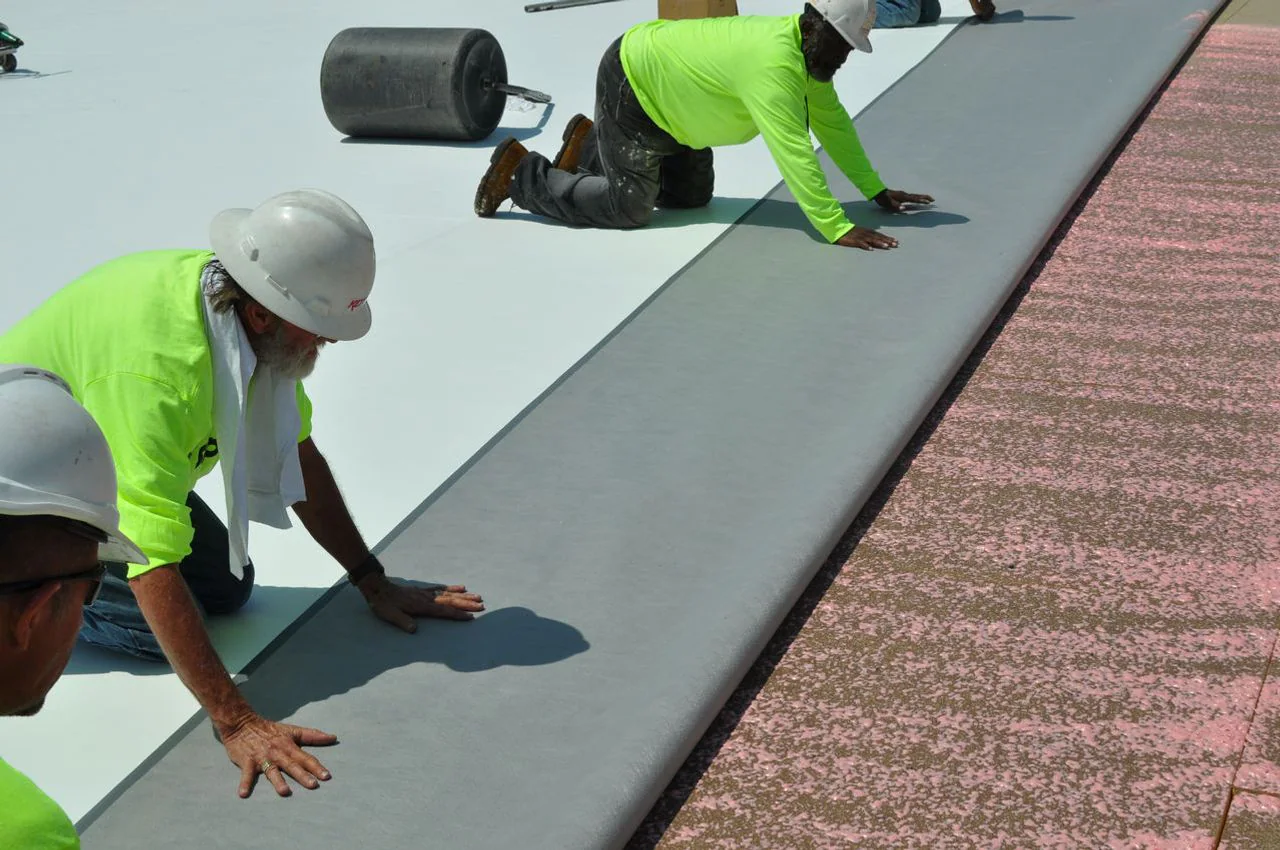
Wind loads in St. Petersburg and Pinellas County are among the highest in Florida for a built-up urban area. The county sits in the Florida Building Code's High-Velocity Hurricane Zone adjacent designation, with design wind speeds of 150 mph or higher for the Gulf-facing areas. Every roof system installed on a Pinellas County warehouse must carry a Florida Product Approval number that was tested at or above the applicable design wind speed for the building's location. Fully adhered systems — either TPO with heat-welded seams and contact adhesive to the insulation, or EPDM with water-based adhesive — provide the most reliable wind uplift performance in the Gulf Coast environment because there are no individual fastener pull-out points to fail in sequence.
Florida's Gulf Coast proximity means that storm surge, though primarily a structural and life-safety concern, affects post-storm roof inspection and repair scheduling. After a major hurricane makes landfall near Tampa Bay, portions of Pinellas County can be inaccessible for days due to flooding. Pre-storm preparation of warehouse roofs — securing any loose equipment, confirming that all drain covers and equipment curbs are fully fastened, temporarily weighting down any fly-loose coping — is as important as the permanent construction quality. We provide pre-storm checklists to all clients with active maintenance agreements and offer rapid pre-storm inspection services when a tropical system is projected to affect the area.
Humidity and heat in St. Petersburg are as extreme as anywhere in Florida. Year-round temperatures above 70°F and humidity levels that rarely drop below 60 percent year-round create conditions where any moisture that gets into a roof assembly will stay there and grow. Insulation selection for St. Petersburg warehouses must account for the high vapor drive from outside the building toward the cooler interior of an air-conditioned space. Polyisocyanurate insulation with foil facers is preferred over fiberglass-faced board in St. Pete applications because foil dramatically slows moisture vapor migration through the insulation layer. Tapered insulation systems that eliminate ponding are particularly important here — standing water in a subtropical climate is not just a structural concern, it's a breeding ground.
TPO 60-mil and 80-mil systems with verified Florida Product Approval are the standard specification for new warehouse construction in Pinellas County. White TPO reduces cooling loads on warehouse spaces that are often cooling large volumes of product in a 95°F summer heat — the energy savings on a 200,000-square-foot St. Pete warehouse with white versus dark roofing can run $15,000 to $25,000 per year in reduced utility costs. We model those savings during the specification phase to help owners justify the premium for a fully adhered rather than mechanically attached system, which provides better wind uplift resistance but at a higher installation cost.
Dock penetrations in St. Petersburg's industrial market include the increasingly common cold-chain logistics facilities that move perishable goods through the port complex and serve the restaurant and grocery distribution networks across the Tampa Bay region. Refrigeration line sets, condensate drains, and fan coil unit penetrations at the roof plane of a cold-storage distribution center require flashing details that handle both the waterproofing function and the thermal insulation function at the penetration — an uninsulated metal sleeve through a cold-storage roof will condense and drip continuously. We use prefabricated insulated roof curbs with vapor barriers at all refrigeration penetrations in St. Pete cold-storage facilities.
Roof drainage in Pinellas County must comply with the county's stormwater management requirements, which are more stringent than many Florida counties because of the peninsula's limited stormwater infrastructure capacity. Re-roofing projects that change the drainage patterns or increase impervious area may trigger a stormwater review. We confirm drainage compliance during permit pre-application and coordinate with the county's stormwater engineering team when any project aspect touches drainage area or direction of flow. Getting this conversation done before permit application submission avoids a stop-work scenario mid-project.
Forklift and equipment exhaust management in a St. Pete warehouse has an air quality dimension. Pinellas County participates in the Tampa Bay Area's air quality management district, and older propane-powered forklift fleets in enclosed warehouse environments can contribute to ozone precursor emissions. The roof ventilation system — ridge ventilators, power exhaust fans, or makeup air units — should be sized for the actual fleet composition operating in the building. We work with HVAC contractors on ventilator sizing when the roof curb plan is being developed, rather than installing curbs and then discovering the ventilation is inadequate after the roof is done.
Post-storm inspection and repair response is something that distinguishes St. Petersburg roofing contractors who are based in the market from those who come down from outside the area after a major storm. Local contractors with established material supply relationships can get TPO rolls and insulation board on site within 24 to 48 hours of a storm event; out-of-market contractors often wait weeks for materials. We maintain a storm inventory of frequently needed repair materials at our Pinellas County storage facility and offer priority response to active maintenance agreement clients after declared weather emergencies.
- What wind rating does a St. Petersburg warehouse roof need?
- Design wind speeds in Pinellas County range from 150 mph in the more exposed Gulf-facing areas to 140 mph in the more sheltered inland locations. All roofing systems must carry a Florida Product Approval with uplift ratings tested at or above the applicable design wind speed for the building's specific location. Confirm the design wind speed with the building department at permit application — it varies by parcel location within the county.
- Should I use fully adhered or mechanically attached TPO on a St. Petersburg warehouse?
- Fully adhered is preferred for coastal Pinellas County locations. It provides superior wind uplift resistance because the entire membrane area contributes to uplift resistance, rather than relying on individual fastener pull-out strength. The cost premium is real, but so is the difference in performance in a direct wind event. Mechanically attached systems with documented pull-out test data for the specific deck are acceptable where budget constraints require it.
- How does stormwater management affect a St. Pete warehouse re-roof?
- Pinellas County has active stormwater management requirements that can affect re-roofing projects if the work changes drainage direction or discharge point. Confirm at pre-application that the project scope won't trigger a stormwater review. Projects that add scuppers discharging to a new location or that change the drainage watershed of a significant area of the roof are most likely to attract stormwater review attention.
- What is the best insulation for a St. Petersburg warehouse given the humidity?
- Polyisocyanurate with foil facers on both sides is the preferred insulation for St. Petersburg's high-humidity subtropical climate. The foil facer dramatically slows moisture vapor migration compared to fiberglass-faced board. Tapered polyiso systems that eliminate flat spots and ponding locations provide additional protection by ensuring that any water that gets through the membrane is immediately directed to drains rather than sitting against the insulation surface.
- What pre-storm roof preparations should a Pinellas County warehouse owner make?
- Before a projected tropical weather event, confirm that all roof equipment is properly secured, all coping caps are tight on their cleats, all drain covers and strainer baskets are in place, and any debris on the roof surface has been removed. Check that scuppers and drains are clear. If you have a roofing contractor on an active maintenance agreement, request a pre-storm inspection visit — most contractors in this market can prioritize active clients before a storm event if contacted at least 48 hours before projected landfall.
 Commercial Roof Repair in St. Petersburg | Planned & Emergency
 Commercial Re-Roofing
 Occupied Building Re-Roofing
 Roof Recover and Overlay