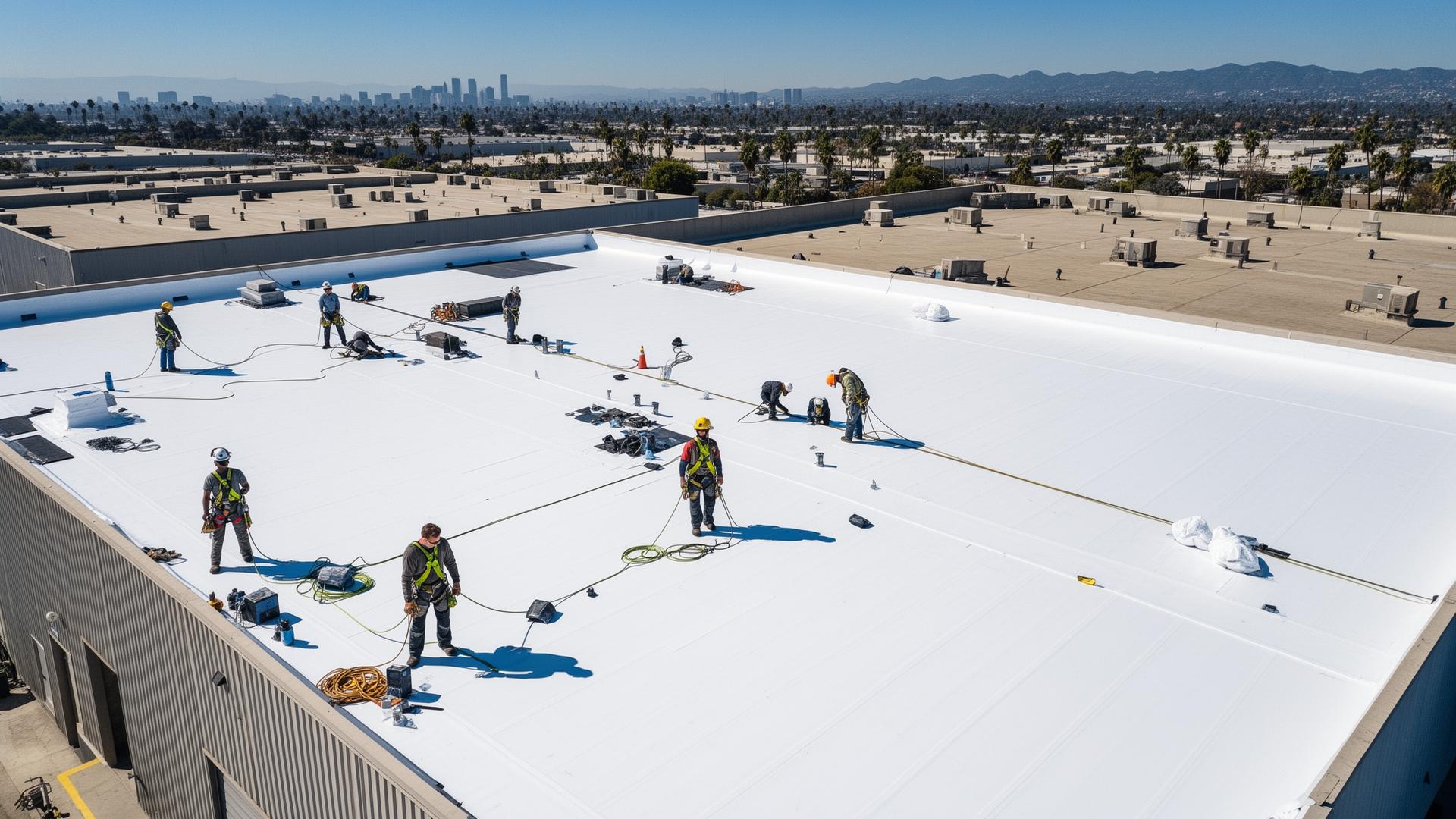
A commercial roof insurance claim in St. Petersburg starts with the roof, not the paperwork. Before an adjuster ever sets foot on a low-slope membrane in the EDGE District or a standing-seam metal roof on a Gateway distribution building, the property needs a clear, dated record of what changed: what the roof looked like before the event, what it looks like after, and what repair scope closes that gap. We are a commercial roofing contractor, not a public adjuster or attorney — our part of the claim is the roof evidence: inspection, photographs, measurements, and moisture readings that describe the damage in terms an insurance carrier can evaluate.
Most commercial property policies covering Pinellas County buildings require prompt notice of loss, an opportunity for the carrier to inspect before repairs begin beyond emergency mitigation, and a scope of loss that separates storm-caused damage from ordinary wear. Owners in Downtown St. Petersburg’s older masonry and built-up roof stock, and owners of newer TPO and standing-seam roofs in Carillon Business Park and along the Gateway office corridor, run into the same early decision: whether the damage is worth filing. A short roof inspection before you call your carrier tells you whether the damage is claim-worthy and helps you report it accurately the first time, which matters because carriers weigh inconsistent early statements against later claim narratives.
Our documentation package for a commercial claim includes dated photographs of every damaged area, membrane and flashing measurements, moisture-meter or infrared readings where water intrusion is suspected, and a written description tying each finding to a probable cause — wind uplift at a parapet edge, wind-driven rain past a coping joint, or granule loss on a modified bitumen cap sheet. On buildings where interior finishes or rooftop equipment have been affected, we photograph that damage too, since a roof claim and an interior water-damage claim are often evaluated together. This package is what your adjuster, and your public adjuster if you engage one, works from.
When the carrier sends an adjuster to walk the roof, we meet them there. Our role in that meeting is to walk the roof alongside the adjuster, point to the specific damage our inspection documented, and answer technical questions about roof system construction, code requirements, and repair method. We do not negotiate settlement figures or represent the owner’s interests to the carrier — that is the role of a public adjuster or attorney if the owner chooses to engage one. What we provide is an accurate, defensible technical record of roof condition that keeps the adjuster’s assessment grounded in what is actually on the roof.
A roof claim scope is frequently narrower than the actual repair requirement, and the gap usually isn’t dishonesty — it’s incomplete inspection. Florida Building Code triggers code-upgrade requirements, including secondary water barrier and updated wind-uplift fastening, when a roof section is reroofed past a certain damage threshold, and those code items belong in the scope alongside the storm-caused repair. Matching an intact adjacent roof section to a repaired one, replacing wet insulation under a membrane that looks fine from above, and accounting for rooftop equipment curbs and penetrations disturbed by the same wind event are also easy to miss on a walk-through inspection. We document these items so the scope your adjuster reviews reflects everything the storm actually affected, including the damage that isn’t immediately visible.
When a claim comes back denied or underpaid, the most useful next step is usually a supplemental technical narrative rather than a dispute letter alone. We can re-inspect the roof, document any damage the original adjustment missed or attributed to pre-existing wear, and provide photographs, measurements, and a written explanation an owner or their public adjuster can submit as supplemental evidence. We don’t guarantee a different outcome, but a claim that was underpaid because of an incomplete inspection is often reconsidered once a fuller, better-documented scope is on record.
The roof stock across St. Petersburg’s commercial footprint varies enough that documentation has to be tailored to the building. Downtown arts-district properties along Central Avenue and in the Warehouse Arts District often carry older built-up or modified bitumen systems where storm damage can be harder to distinguish from age-related deterioration without a trained eye. Gateway and Carillon Business Park office and flex buildings tend toward TPO, EPDM, or standing-seam metal, where wind uplift at seams and edge metal is the more common failure point. Commercial buildings on the barrier islands and beach communities carry the added factor of salt-air corrosion, which accelerates fastener and edge-metal deterioration and can complicate the question of what damage is storm-caused versus environmental. We document accordingly for each roof type.
To be clear about our role: we’re your roofing contractor, not a public adjuster. We inspect, document, and substantiate roof damage so that you and your adjuster — or your public adjuster, if you retain one — are working from an accurate, complete scope. We don’t file claims, negotiate settlements, or represent owners to insurance carriers.
If a storm has affected your roof, or you’re not sure whether recent damage is worth reporting to your carrier, start with an inspection. Call 727-761-6366 or request a roof review below, and we’ll document what’s on the roof so you can make an informed decision about your claim.
Questions Owners Ask
Does insurance cover commercial roof replacement in Florida?
Most commercial property policies cover roof damage caused by a covered peril — wind, hail, hurricane, fire — but coverage for full replacement versus repair depends on the extent of covered damage and your policy’s replacement-cost or actual-cash-value terms. A documented inspection is what determines whether the damage meets your policy’s threshold for repair versus full replacement; we provide that documentation, but coverage determinations are made by your carrier under your specific policy language.
What’s the process for filing a commercial roof insurance claim?
Report the loss to your carrier promptly after discovering damage, get emergency mitigation such as tarping or water extraction done if needed to prevent further damage, and have a roofing contractor inspect and document the roof before repairs begin. Your carrier will send an adjuster to inspect; we meet them on the roof to walk through our documentation. From there the carrier issues a scope and payment, which you or your public adjuster can review against our documented findings.
What should I do if my claim is denied or the payout doesn’t cover the repair?
Request the specific basis for the denial or the line-item reasoning behind the payout in writing. Often a denial or underpayment stems from an inspection that missed damage or attributed it to pre-existing wear. We can re-inspect and provide supplemental documentation — photographs, measurements, and a written technical explanation — that you or a public adjuster can submit for reconsideration.
Should I repair or fully replace my roof after storm damage?
That depends on the extent and location of the damage, the roof’s remaining service life, and your policy’s replacement terms. A roof with damage confined to one section and years of remaining service life is often a repair-and-match scope; a roof with widespread wind uplift, saturated insulation, or damage near the end of its service life is more often a replacement conversation. We document the full extent of damage so that decision is based on actual roof condition.
Will you negotiate with my insurance company on my behalf?
No. We’re a roofing contractor, not a public adjuster — we don’t negotiate settlements or represent your interests to the carrier. What we provide is the technical roof documentation, including inspection, photographs, measurements, and scope, that you or a public adjuster can use in your own negotiation with the carrier.
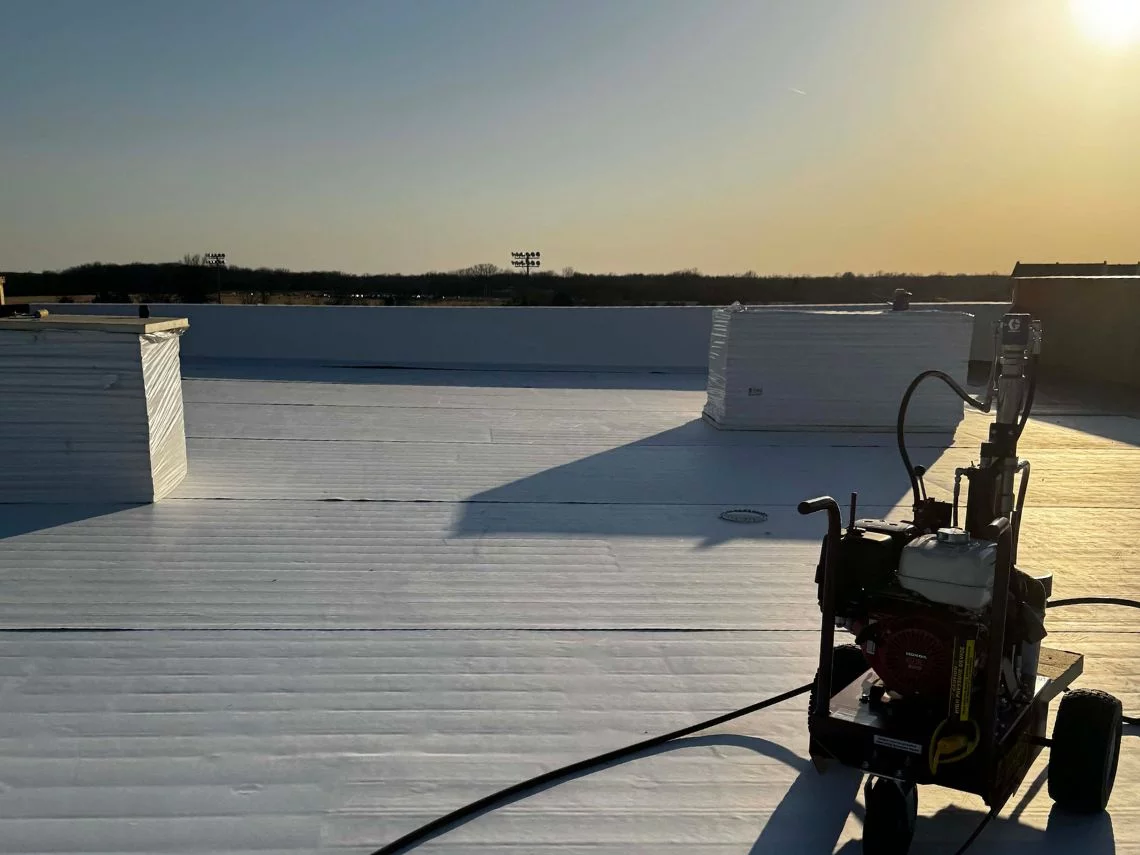 Commercial Roof Repair in St. Petersburg | Planned & Emergency
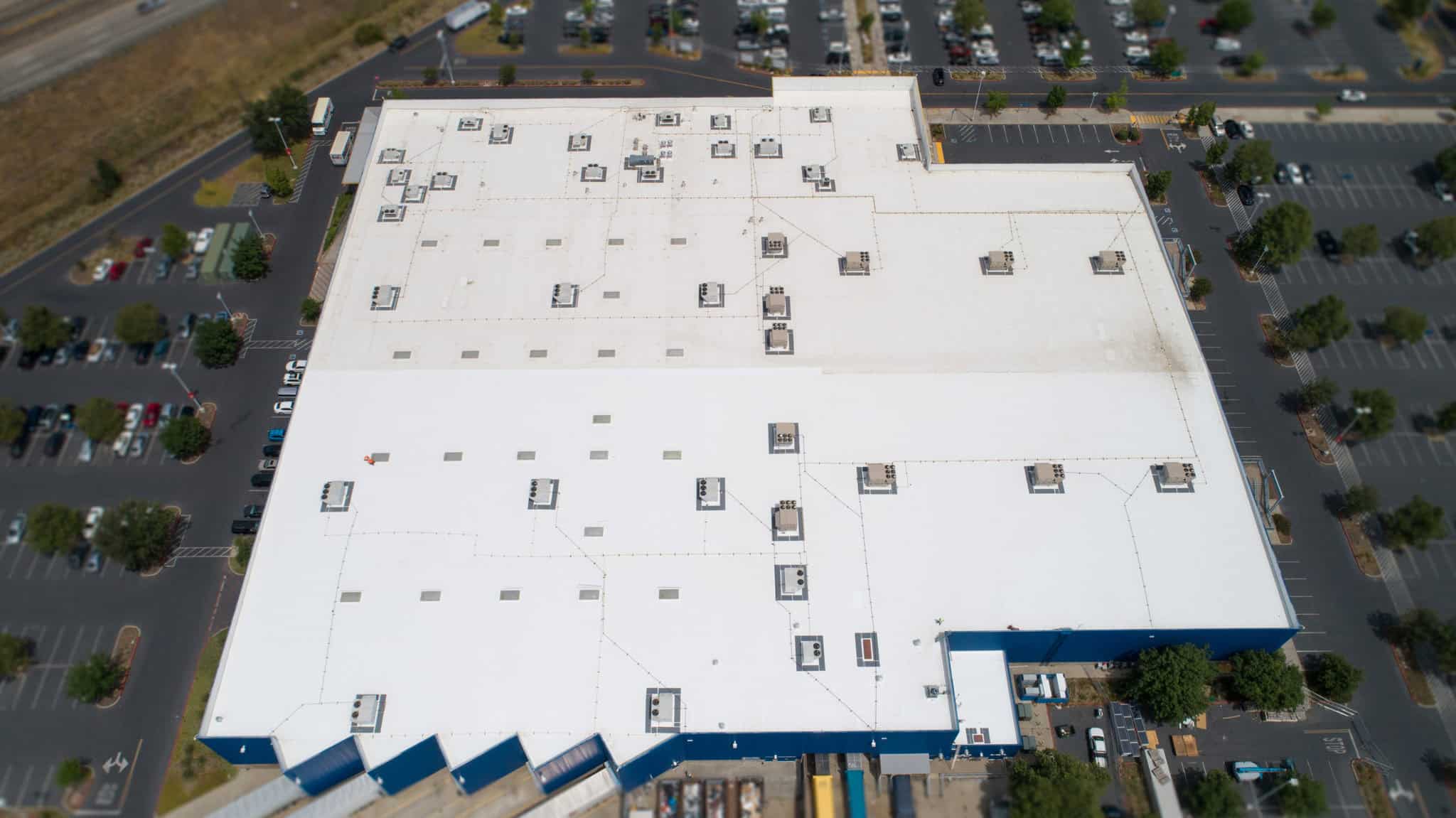 Commercial Re-Roofing
 Occupied Building Re-Roofing
 Roof Recover and Overlay