
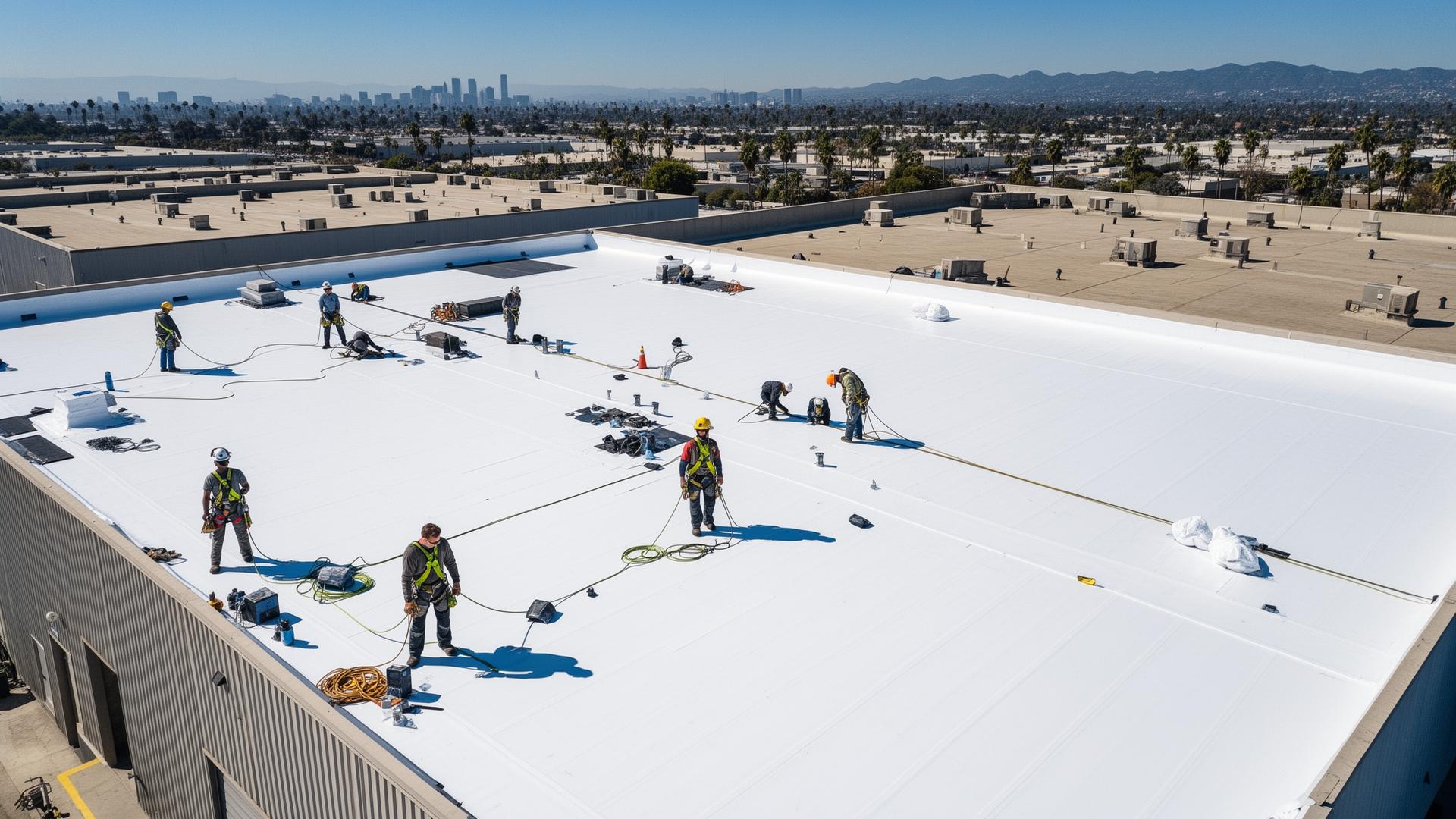
St. Petersburg sits on a peninsula bounded by Tampa Bay and the Gulf of Mexico, and that geography defines how hurricanes affect commercial roofs here. Storm surge, sustained wind, and wind-driven rain arrive together, and the barrier island commercial strip — the hotels, restaurants, and retail buildings along the beach communities — sits closest to the surge line while also carrying some of the most exposed roof edges and rooftop equipment in the market. A commercial roof insurance claim after a hurricane has to account for all three damage mechanisms rather than only the most visible one.
The recent hurricane seasons that affected the Tampa Bay region are still fresh for most Pinellas County property owners, and the pattern they reinforced is a familiar one: wind damage at parapets, edge metal, and rooftop unit curbs shows up first, followed by water intrusion that continues to surface for weeks after the storm as saturated insulation dries unevenly or a compromised seam finally fails under a lighter rain. We inspect for both the immediate wind damage and the slower-developing water damage, because a claim filed before the full extent is documented tends to undercount the actual repair scope.
Named-storm deductibles are a factor unique to hurricane claims that owners are often surprised by. Most Florida commercial property policies carry a separate, percentage-based deductible that applies specifically to damage from a named storm, which is typically higher than the policy’s standard all-other-perils deductible. That deductible structure is a policy term set by your carrier, not something we determine, but it affects how a claim gets evaluated — a smaller area of roof damage may fall entirely within the named-storm deductible, while damage across a larger portion of the roof clears that threshold and triggers coverage. Our documentation quantifies the actual damaged area so you and your insurance broker can work out where your specific claim falls against your policy’s deductible terms.
Storm-surge exposure adds a documentation wrinkle specific to St. Petersburg’s waterfront and barrier island commercial properties. Buildings near Tampa Bay, along the downtown waterfront, or on the beach communities can sustain roof and rooftop-equipment damage from wind and rain even when the structure itself is above the surge line, and separating wind damage from any surge-related water intrusion at grade level matters for how the claim gets categorized. We document roof-level damage specifically — membrane, flashing, edge metal, curbs, and penetrations — so that portion of the loss is clearly attributable to wind rather than flood, which is typically a separate policy or a separate claim entirely.
Rooftop equipment takes a disproportionate share of hurricane damage on St. Petersburg commercial buildings. HVAC condensers, exhaust fans, and communication equipment mounted on curbs are exposed to the full force of sustained hurricane winds, and a curb or equipment mount that shifts or fails during the storm often tears the membrane around it, creating a leak path that wouldn’t exist from wind alone. We document equipment-adjacent damage as part of the roof inspection, since carriers sometimes evaluate mechanical equipment damage separately from roof membrane damage and the two need to be documented in a way that makes the connection between them clear.
Older commercial roofs in Downtown St. Petersburg’s arts district and the Warehouse Arts District — many with built-up or modified bitumen systems installed before current Florida Building Code wind-uplift standards — face a specific post-hurricane question: how much of the damage is storm-caused versus attributable to a roof that was already near the end of its service life. That distinction matters for claim adjudication, and it’s exactly the kind of technical determination that benefits from an experienced contractor’s documented assessment rather than a visual walk-through alone. We document current condition, probable pre-storm baseline where available, and specific storm-attributable failure points.
We’re your roofing contractor, not a public adjuster. After a hurricane, we inspect the roof, document wind and water damage with photographs and measurements, and meet your carrier’s adjuster on the roof to walk through what we found. We don’t file the claim, negotiate the settlement, or represent your interests to the insurance company — that is a public adjuster’s role if you choose to engage one. Our job is making sure the roof evidence is complete and accurate.
If your building sustained hurricane damage, or you want a documented baseline before the next storm season, call 727-761-6366 or request a roof review below.
Questions Owners Ask
How soon after a hurricane should I have my commercial roof inspected?
As soon as it’s safe to access the property. Early inspection captures damage before temporary repairs, debris removal, or continued weather exposure change what’s visible. If a tarp or emergency dry-in is needed to prevent further water intrusion, we photograph the damage first and can typically arrange emergency mitigation the same visit.
What is a named-storm deductible and how does it affect my claim?
Most Florida commercial property policies apply a separate, usually percentage-based deductible specifically to damage from a named storm, which is often higher than the standard deductible for other causes of loss. Whether your specific claim clears that deductible depends on the documented extent of damage and your policy’s exact terms — your insurance broker can walk you through your policy’s deductible structure once we’ve documented the damage.
My roof looks fine from the ground after the storm — do I still need an inspection?
Yes. Wind uplift at parapets and edge metal, membrane seam separation, and rooftop equipment curb damage are frequently invisible from the ground or from an interior walk-through. Water intrusion from a compromised seam can also take days or weeks to show up as an interior stain. A roof-level inspection after any hurricane that affected your area is the only reliable way to confirm there’s no damage.
Does homeowners-style flood coverage apply to hurricane roof damage?
Flood and storm-surge damage are typically covered under a separate flood policy, while wind and wind-driven rain damage to a roof are usually covered under your commercial property policy’s wind or named-storm provisions. We document roof-level wind and water damage specifically so it’s clearly attributable to wind rather than surge, but which policy applies and to what extent is a coverage determination made by your carrier and broker.
How long do I have to file a hurricane damage claim in Florida?
Florida law requires that claims for hurricane-related property losses be reported to your carrier within one year of the date the storm made landfall or caused the damage. If you suspect hurricane damage to your roof, even if it isn’t obviously significant, having it inspected and reported within that window preserves your ability to claim it.
 Commercial Roof Repair in St. Petersburg | Planned & Emergency
 Commercial Re-Roofing
 Occupied Building Re-Roofing
 Roof Recover and Overlay