
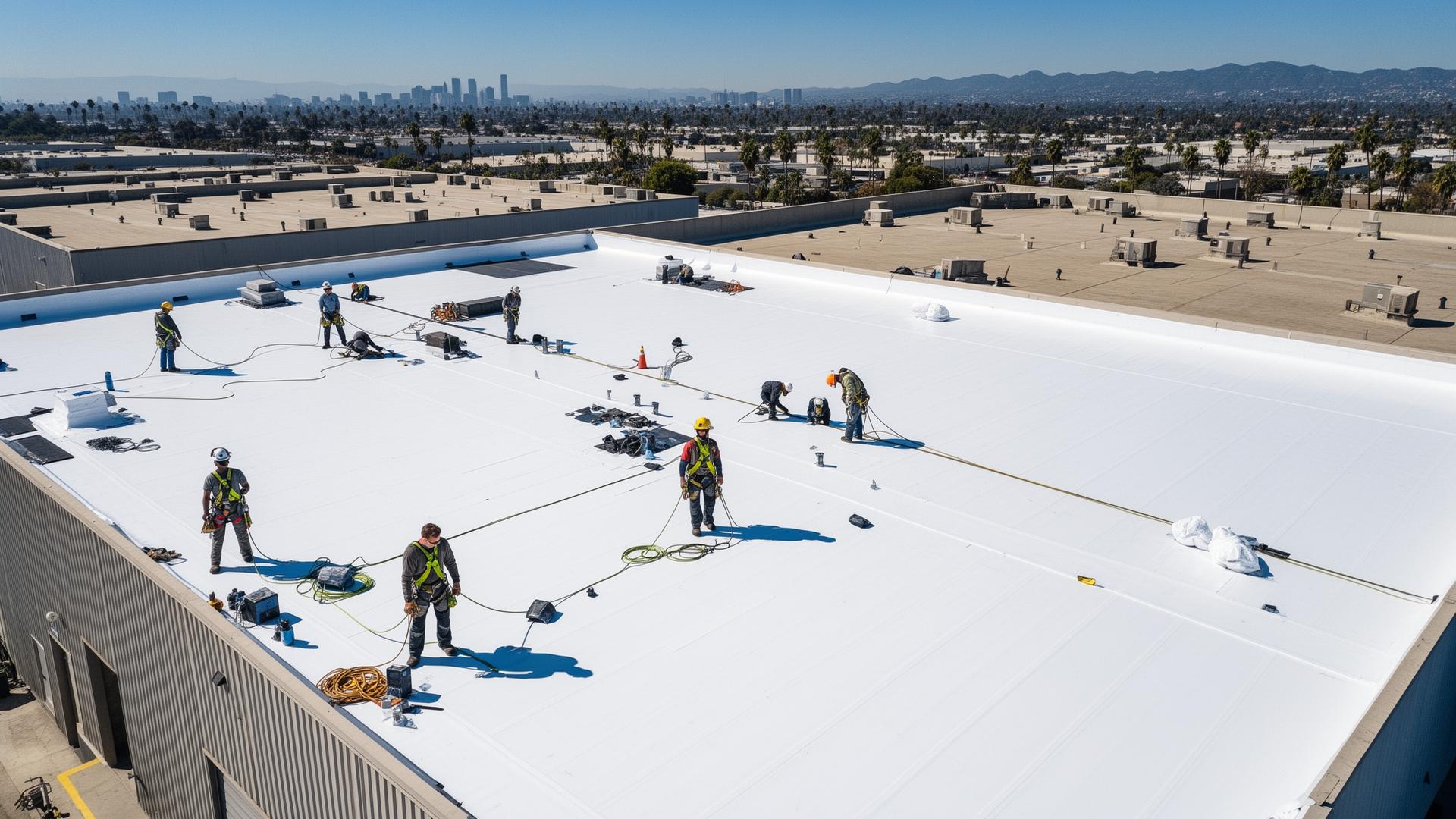
Tampa Bay sees severe thunderstorm activity through most of the year, and Pinellas County ranks among the most lightning-active areas in the country during summer storm season. Outside of named hurricanes, this is the wind-and-storm exposure that drives most commercial roof insurance claims in St. Petersburg: fast-moving thunderstorm cells with straight-line wind gusts, heavy short-duration rain, and frequent lightning strikes that can affect rooftop-mounted equipment as much as the membrane itself.
Thunderstorm wind gusts in this region regularly exceed the threshold that causes membrane and edge-metal damage on commercial roofs, even without a named tropical system involved. A single severe thunderstorm cell moving through St. Petersburg can produce gusts strong enough to lift a poorly adhered TPO or EPDM seam, tear loose edge-metal coping, or dislodge rooftop unit curbs, and because these events are shorter and more localized than a hurricane, the resulting damage is sometimes overlooked until the next rain event causes an interior leak. We document wind-event damage promptly so the cause is clearly tied to the storm date, which matters when a claim is filed weeks after the actual event.
Lightning strikes are a distinct claim category from wind damage, and Pinellas County’s summer storm pattern makes them a regular occurrence on commercial rooftops. A direct or near strike can damage rooftop-mounted HVAC equipment, communication antennas, and electrical conduit runs, sometimes without leaving obvious membrane damage. We document lightning-related equipment and roof-penetration damage separately from wind damage, since carriers typically evaluate them under different claim categories and the documentation needs differ — equipment damage often requires a manufacturer or electrical assessment alongside the roofing inspection.
Hail is a less frequent but real factor in Tampa Bay thunderstorms, and it warrants brief mention here even though hurricane and lightning-driven wind are the dominant claim drivers in this market. When a thunderstorm cell does produce hail, granule loss on modified bitumen and built-up roofing, and dimpling or cracking on single-ply membranes and metal roofing, are the damage patterns we look for. Hail damage from a Florida thunderstorm is documented the same way as any other storm event: dated photographs, measurements of affected area, and a written description tying the damage to the storm date.
Commercial buildings across St. Petersburg's inland corridors — the office parks in Carillon Business Park and along the Gateway corridor, retail and mixed-use buildings along Central Avenue, and industrial and flex buildings further from the coast — are just as exposed to thunderstorm wind and lightning as coastal properties, sometimes more so given how frequently summer storm cells track across the interior of the county. We treat wind and storm claims the same way regardless of proximity to the water: document the roof, quantify the affected area, and produce a scope an adjuster can evaluate.
A recurring pattern on non-hurricane wind claims is a carrier attributing membrane lifting or seam separation to installation age rather than wind event. Distinguishing wind-caused seam failure from age-related adhesive breakdown requires understanding how a specific roof system fails under load, which is a technical assessment we're positioned to make and document. Where the two are genuinely difficult to separate, we document what we can determine and note where further technical review may be warranted.
We’re your roofing contractor, not a public adjuster. For thunderstorm wind and lightning claims, we inspect the roof and rooftop equipment, photograph and measure the damage, and meet your carrier’s adjuster on-site to walk through the findings. We don’t file the claim or negotiate the settlement on your behalf — our documentation is what supports an accurate scope for you and your adjuster to work from.
If a recent storm affected your roof, call 727-761-6366 or request a roof review below and we’ll get an inspection scheduled.
Questions Owners Ask
How do I know if thunderstorm wind, rather than age, caused my roof damage?
Wind-caused damage typically shows a pattern tied to a specific event — lifted seams or edge metal on the windward side of the building, torn membrane near a roof edge or corner where wind pressure concentrates, or displaced rooftop equipment. Age-related deterioration tends to be more uniform across the roof. We document the pattern and location of damage and tie it to a specific storm date where possible, which is the basis for distinguishing the two.
Can lightning damage be part of a roof insurance claim?
Yes, though lightning damage to rooftop equipment and electrical systems is often evaluated as a separate claim category from wind or membrane damage. We document lightning-related damage to rooftop equipment, antennas, and conduit runs as part of our inspection, and note where an electrical or equipment-specific assessment may also be needed.
Does hail actually affect commercial roofs in the St Petersburg area?
It can, though hail is less frequent here than hurricane wind and thunderstorm wind gusts, which are the dominant causes of storm-related roof claims in this market. When a thunderstorm does produce hail, we inspect for granule loss, membrane dimpling, and metal-panel damage the same way we would after any wind event.
Do I need to file a claim for every storm, even minor wind events?
Not necessarily — a brief inspection after a notable wind event tells you whether there's damage worth reporting. Filing a claim for damage that turns out to be minor or non-existent isn't usually worthwhile, but skipping the inspection after a storm that did cause damage risks that damage worsening before it's addressed. We can do a quick post-storm check to help you make that call.
What documentation do I need if my claim is for a single wind event, not a hurricane?
The same core elements: dated photographs of the damage, measurements of the affected area, and a written description connecting the damage to the specific storm date and wind conditions. We keep records of the storm dates we inspect for, which can help establish the timeline your carrier expects when a claim is filed after a discrete wind or lightning event rather than a widely reported hurricane.
 Commercial Roof Repair in St. Petersburg | Planned & Emergency
 Commercial Re-Roofing
 Occupied Building Re-Roofing
 Roof Recover and Overlay